

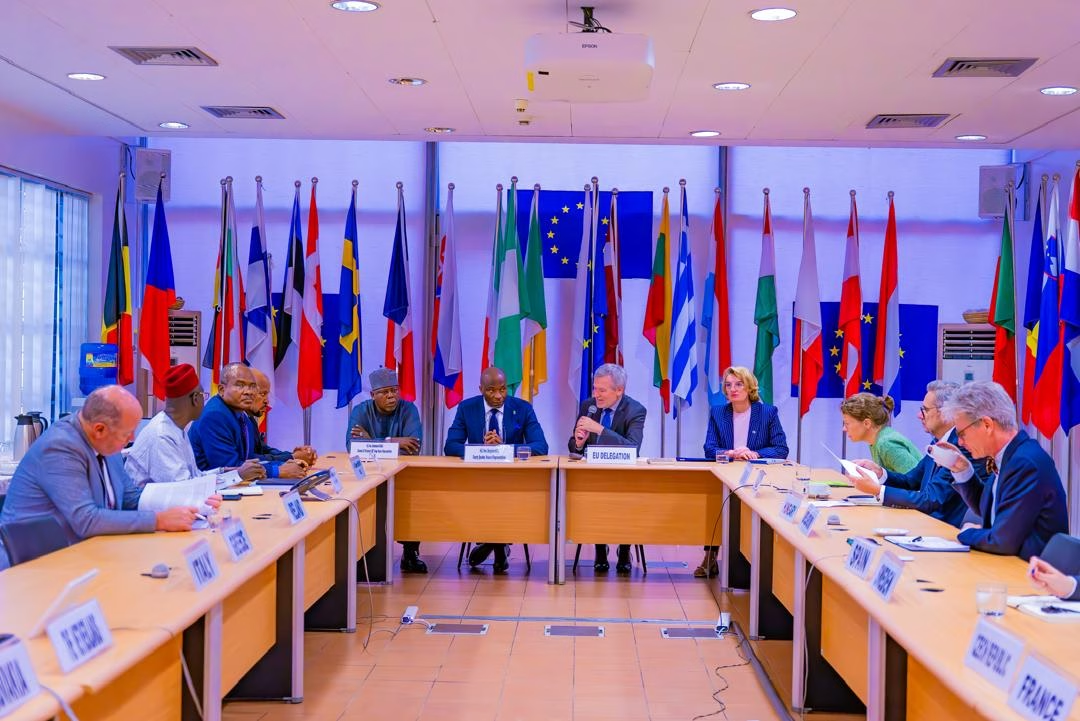

The Deputy Speaker of the House of Representatives, Hon. Benjamin Okezie Kalu, has said that the proposed state police bill contains strict guardrails to prevent abuse.
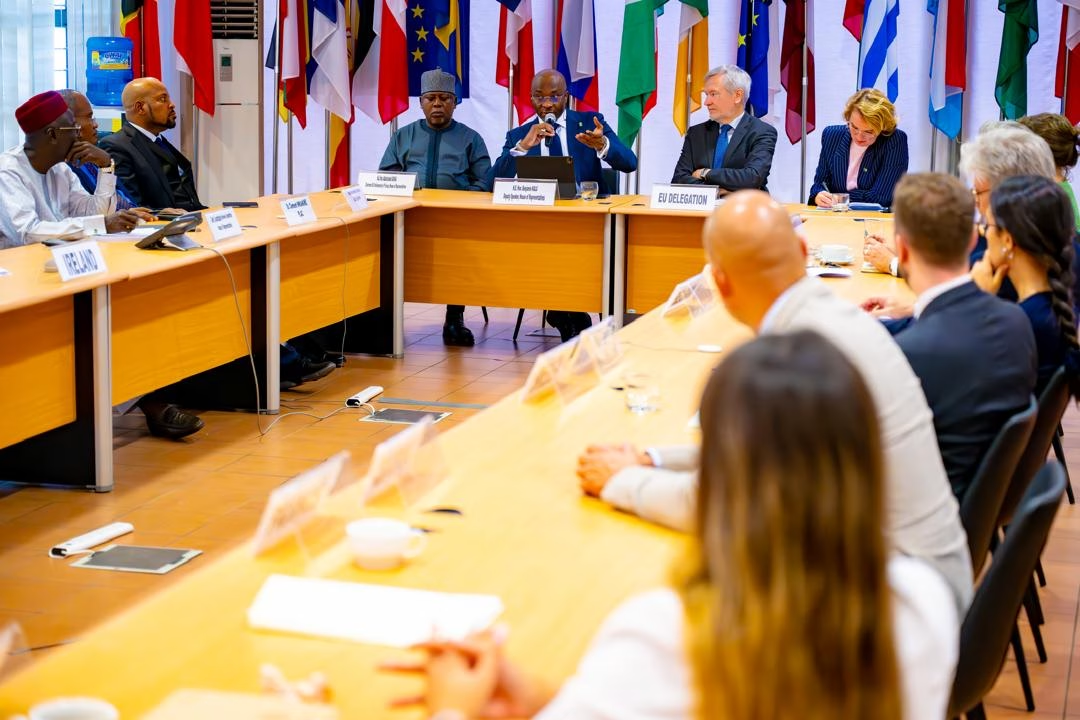
Speaking at a reception hosted by the Ambassador of the European Union to Nigeria and ECOWAS, Ambassador Gautier Mignot in Abuja on Tuesday, Kalu who rallied support from European Union Heads of Mission for the country’s ongoing constitutional reforms said that Nigeria’s current centralized policing structure is overstretched for a federation of 923,768 square kilometres and more than 230 million people.
The Deputy Speaker said that under the proposal, States would be allowed to establish their own police services with defined jurisdictions, independent oversight, professional recruitment standards, and coordinated command.
The Deputy Speaker also addressed some concerns raised by diplomatic partners about possible misuse, assuring that it will not be abused.
Kalu said: “Nigeria is a federation of 923,768 square kilometres, home to more than 230 million people by United Nations estimates, yet it remains policed by a single, centrally commanded force, stretched far below the United Nations’ recommended ratio of one police officer to every 450 citizens. No other federation of our size operates this way; from Germany to India, from Canada to Australia, the world’s great federations police locally and coordinate nationally.
“Our proposal follows that settled wisdom: a constitutional framework allowing states to establish their own police services, with defined jurisdictions, independent oversight, professional recruitment standards, and coordinated command”.
“I often put it simply: the officer who comes from a community knows its roads, its markets, its people, its tensions. The officer who knows the forest will police the forest.
“And to legitimate concerns about abuse; concerns we have heard, including from partners in this room – the bill responds
not with assurances but with architecture. Our objective is not simply to decentralise policing; it is to constitutionalise accountability.
“We have put guardrails in the way the State Police is going to be operated. The guardrails will not allow any abuse”.
On the Reserved Seats for Women Bill, the Deputy Speaker said the representation was both a democratic and economic imperative.
Citing data from the National Population Commission (NPC), Kalu noted that women make up 49.3 percent of Nigeria’s population but hold only 19 of 469 seats in the National Assembly.
“The McKinsey Global Institute estimates that the full inclusion of women could add up to 229 billion dollars to Nigeria’s economy.
“The bill creates additional seats reserved for women taking nothing from anyone, adding voices for everyone, and over one million Nigerians have signed
documented endorsements of it. My conviction is simple: no democracy is
complete while half of its people watch governance from the gallery”, he said.
The Deputy Speaker also listed other pillars of the reform agenda to include Local government autonomy with guarantees of democratically elected councils and direct fiscal accountability; citizenship reforms to remove gender inequities and introduce citizenship by investment; judicial reforms to speed up appeals and strengthen judicial independence and welfare; electoral reforms, human rights protections, fiscal reforms, amongst others.
The Deputy Speaker who is also the chairman, House Committee on Constitution Review solicited the support of the the EU Heads of Mission on the reforms, saying that the bills have reached their most critical stage, about seeking ratification by at least 24 State Houses of Assembly having passed by both chambers of the National Assembly.
“In this decisive phase, your continued partnership through technical cooperation, comparative expertise, and the candid counsel that only trusted friends can give matters more than ever.
“The Office of the Deputy Speaker remains an open door to every mission in this room, and we welcome deeper parliamentary diplomacy between Nigeria and the legislatures of Europe. What we have built together over these years, we can multiply in the years ahead.
“For ultimately, the measure of constitutional reform is not the number of clauses amended; it is the number of lives improved because those clauses were amended. When the history of this democratic era is written, let it record that Nigeria did not merely defend its democracy, it deepened it and let it record that Europe stood with us as we did”, Kalu said.
The reception was attended by EU ambassadors and other diplomatic representatives in Nigeria.