


By Ezeh Emmanuel Ezeh, PhD
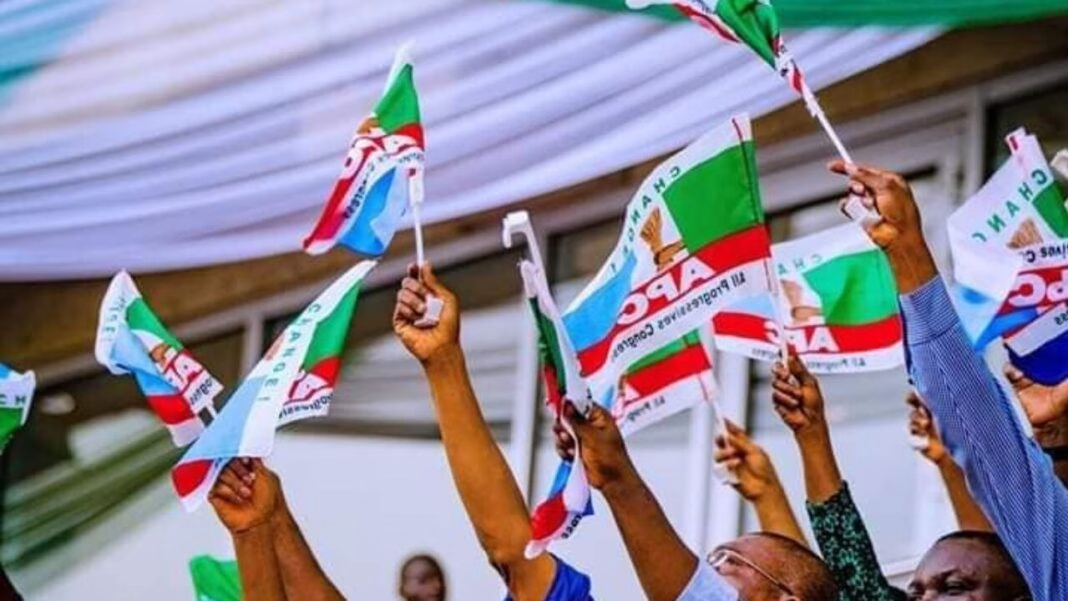
Nigeria is entering a dangerous phase. This is because APC is leading the country into a period that could ultimately threaten the survival of our democracy. The signs are everywhere: deepening hardship, rising public anger, growing distrust in our institutions, reckless outbursts from politicians and a widening gulf between the rulers and the ruled.
The question confronting the country is no longer whether Nigerians are frustrated. It is whether those in power understand how dangerous that frustration has become. That is why when you hear the likes of Ayodele speak, I shudder, when the likes Keyamo talk, I am surprised. These are people who ought to know. But they’ve joined the likes of Oshomole, Akpabio in a mindless, soulless descent into national low never imagined from decent minds.
The greatest danger facing Nigeria today is not opposition parties, protests, or dissenting voices. It is the growing belief among some political actors that force can achieve what persuasion cannot; that APC can ride it rough as they wish over Nigerians without facing any pushback.That belief is a dangerous illusion.
Nothing illustrates this more than the perceived manipulation of our courts. The judiciary, long regarded as the last hope of the common man, cannot be undermined without consequences. When people begin to see that those in power no longer care about the rule of law, and that the courts appear to recognise friends, relatives, and political interests rather than justice, the political endgame takes an unexpected turn.
APC may insist that all is fair in politics, but the people hear something different. When court judgments are delivered, many Nigerians no longer hear law. They hear the names of those they believe negotiated the outcome. They hear that the law now sees, that the law has become an instrument of convenience rather than justice. They see our institutions that no longer pretend to serve the people but political interests. And when citizens lose faith in the laws meant to protect them, they begin seeking other ways to pursue justice. We have already arrived at that crossroads.
Reports from across the country, the latest being Delta and Ebonyi States suggest a troubling pattern of violent confrontations surrounding political activities.
Whatever the competing narratives may be, one reality is becoming increasingly clear: political competition is being poisoned by intimidation and bloodshed. Violence has boldly entered into our politics. But nobody truly knows nor can controls where it ends.
Both Thomas Sowell and history offer sobering lessons. Societies rarely collapse simply because people are angry. They collapse when leaders mistake public patience for weakness and respond to legitimate grievances with repression rather than reform. There are always limits to power.
And this may prove to be APC’s greatest miscalculation.The party appears to have concluded that public outrage will eventually fade, that hardship can be managed through political manoeuvring, and that any opposition can be neutralised through superior control of state power. Yet beneath the surface, something far more significant is taking place.
Anger has been accumulating. Trust has been evaporating. Millions of Nigerians are beginning to question whether democratic participation can still produce meaningful change.
Nigeria’s crisis of confidence began with a lack of empathy in public policy. It began with hunger. It began with the destruction of public trust in democratic institutions. Subsidy, they insisted was gone, and proceeded to live like kings while the people’s lives were destroyed. The Nigerian middle class, the buffer and protect between the rich and the poor collapsed in single swoop. We became a country of hungry desperate citizens.
The hunger we speak of is not merely the hunger of an empty stomach. It is the hunger created by shrinking opportunities, crumbling public services, insecurity, and the growing feeling that ordinary citizens have been abandoned by those elected to serve them.
The social contract is fraying. Roads are deteriorating. Schools are struggling. Insecurity persists. Young people see fewer opportunities ahead, while those in power often appear insulated from the consequences of their decisions. Increasingly, Nigerians feel that democracy has delivered voters without delivering accountability.
History warns us what can happen when such conditions persist. The French Revolution stands as a powerful example. Before it erupted, the ruling elite failed to recognise how deeply disconnected they had become from the people. The crisis was not caused by a single event. It was the accumulation of years of hardship, arrogance, indifference, and a refusal to acknowledge public suffering. The famous trigger “…if the people can’t afford bread, let them eat cake” became the final straw.
Eventually, the system lost legitimacy, and events moved beyond the control of those who believed they held power securely.
Nigeria is not France, and history never repeats itself exactly. But what happened in Nepal is a warning that everything is on the table. That no political order can remain stable when large numbers of citizens lose faith in its fairness and legitimacy.
This is where both INEC and the judiciary should be concerned. Many citizens no longer trust them. The people have finally reached a point where fighting back is the only reaction left.
That is why any attempt to substitute coercion for consent would be profoundly dangerous. Nigerians can endure hardship. They can endure disappointment. What they cannot endure indefinitely is the belief that their voices no longer matter.
If citizens come to see elections as mere coronations rather than genuine contests; if political violence becomes normalised; and if state power is increasingly viewed as an instrument of intimidation rather than representation, then the consequences may extend far beyond the fortunes of any single party.
The collapse that follows would not be APC’s failure alone. It would be Nigeria’s tragedy.
But the country may still have a choice. It can move towards greater accountability, stronger institutions, and democratic renewal. Or it can continue down a path where public frustration meets official indifference and political competition increasingly gives way to force.
The lesson from history is clear: governments are strongest when they listen before anger hardens into resentment, and resentment hardens into crisis. Nigeria does not need a revolution. It needs leadership. And time is running short.
Dr Ezeh Emmanuel Ezeh, an Oxford-trained entrepreneur and public affairs commentator, is the Labour Party candidate for Abakaliki/Izzi Federal Constituency. He is a former Deputy President of the South East Chamber of Commerce, Industry, Mines and Agriculture (SECCIMA) and currently serves as President of the Ebonyi Chamber of Commerce, Industry, Mines and Agriculture (EBCCIMA). He wrote this piece from Lagos.