

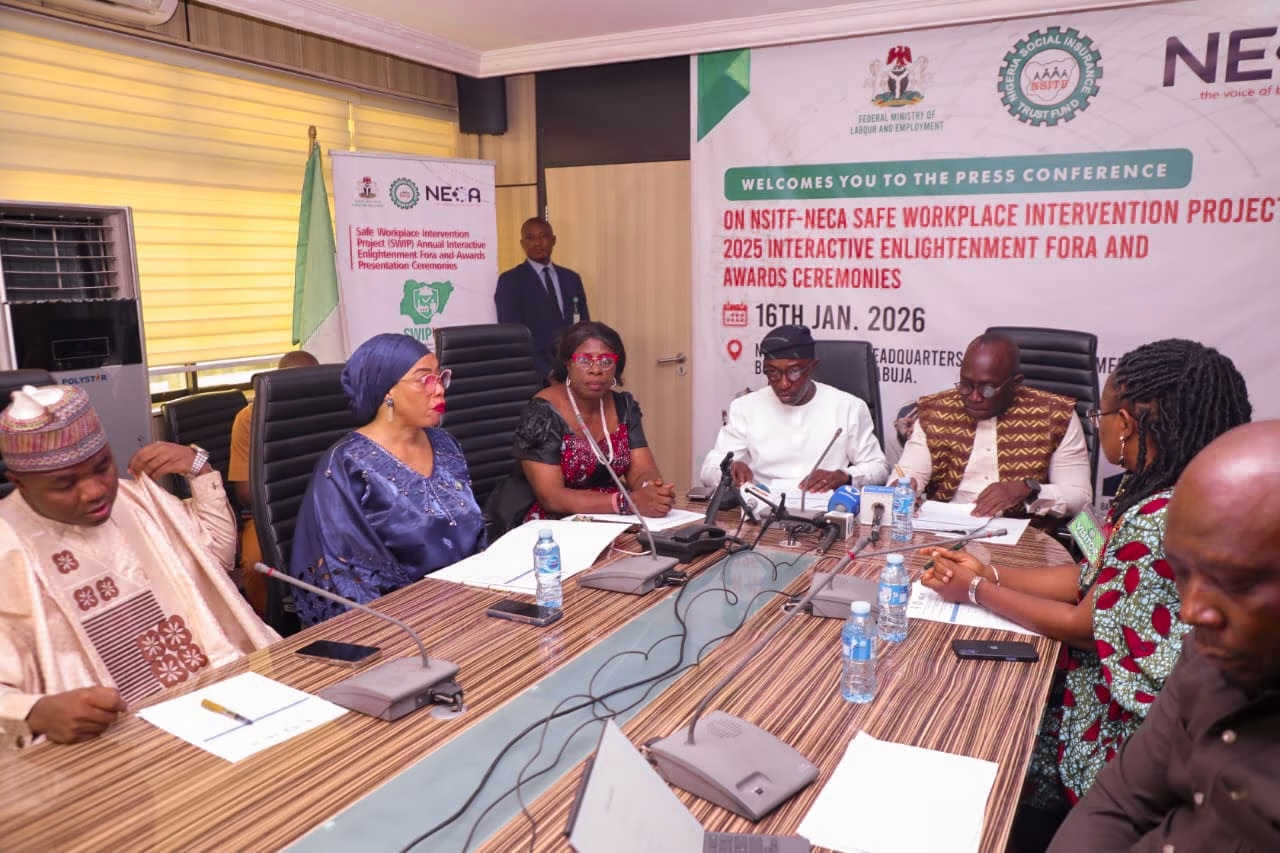

The Managing Director of the Nigeria Social Insurance Trust Fund (NSITF), Barrister Olúwaṣeun Faleye has said economic activities and growth are anchored on the protection, responsibility to, and respect for the Nigeria worker.
Barrister Faleye stated this at a press conference to flag off the 2025 Safe Workplace Intervention Project (SWIP).
The project, a collaboration between the NSITF and the Nigeria Employers’ Consultative Assembly, (NECA), was scheduled for the year 2025 but “operational exigencies on both sides made it necessary to reconvene in January, 2026,” according to the NSITF MD.
Delving into the purpose of the project, Faleye said “SWIP was conceived as a practical response to a persistent national
challenge: the reality that too many Nigerian workers remain
exposed to avoidable workplace risks, and too many employers
still do not fully understand, or comply with, the protections
provided under the Employees’ Compensation Act, 2010.”
“The core purpose of SWIP is simple but profound:
To save lives, protect livelihoods, and strengthen productivity by making workplace safety and compliance the norm rather than
the exception,” he added.
Justifying the NSITF-NECA project, Faleye submitted that “experience has shown us that laws alone do not change
behaviour. The Employees’ Compensation Act is robust, but its
effectiveness depends on awareness, trust, and consistent engagement.
“Many workplace injuries and fatalities occur not
out of malice, but because safety systems are weak, risks are
poorly understood, or compliance is viewed narrowly as a
regulatory burden.”
He explained that “SWIP was designed to close this gap,” and bring “the law to life by translating statutory provisions into practical understanding; it connects employers to the real business value of compliance; and it reinforces the idea that
workplace safety is not an abstract obligation, but a human,
economic, and productivity imperative.”
Barrister Faleye called on the media to help escalate workplace safety to national priority. In his words, “the role of the media in this effort cannot be overstated. By
telling these stories, highlighting best practices, and sustaining
public conversation, you help reposition workplace safety from
a peripheral issue to a national priority.”
The Permanent Secretary, Federal Ministry of Labour and Employment, Dr. Sally Ousmane, in an address at the press conference delivered on his behalf by the Director Regional Health and Safety, Mrs. Florence Owie, commended NSITF and NECA “for sustaining this laudable
initiative, which continues to make meaningful contributions to the strengthening of
Nigerian occupational safety and health.”
He opined that, “the Safe Workplace Intervention Project is a
clear demonstration of what can be achieved through effective collaboration between
governments, employers, and social security institutions.
“I am particularly pleased
that the audit components of this year’s project covered no fewer than 200 workplaces
in all six geopolitical zones of the country, with the active technical participation of the
Ministry’s Occupational Safety and Health Department.
“The Ministry’s involvement as the audit technical and implementation partner was aimed at ensuring that the process was conducted in line with national occupational
health and safety standards and global best practises.”
In his remarks at the occasion, the Director-General, Nigeria Employers’ Consultative Association, NECA, Mr. Adewale Smatt Oyrrinde, said Occupation Safety and Health has become a “core convention of the International Labour Organization, (ILO.)”
The DG, while explaining that the goal of the SWIP awards is “to enhance voluntary compliance,” revealed that some winning organisations “will be presented ambulances and personal protective equipment in Lagos, Enugu, and Abuja on the 20th, 22nd and 27th of January 2026 respectively.
On the integrity of the selection process, Mr. Oyerinde said the process endured rigorous multi-level scrutiny auditing and vetting.
Looking ahead, he stated that focus of occupational health and safety would now shift to peculiar problems presented by AI, working at home and other technological innovations.
In a call-to-action address at the event, the Executive Director Operations, NSITF, Hon. Mojisola Ali-Macaulay identified the joint assessment by the Federal Ministry of Labour and NSITF
as a confirmation that safe workplaces are not
aspirational but are achievable when leadership, regulation, and
responsibility work together, exactly as intended by the Employees’
Compensation Act, 2010.”
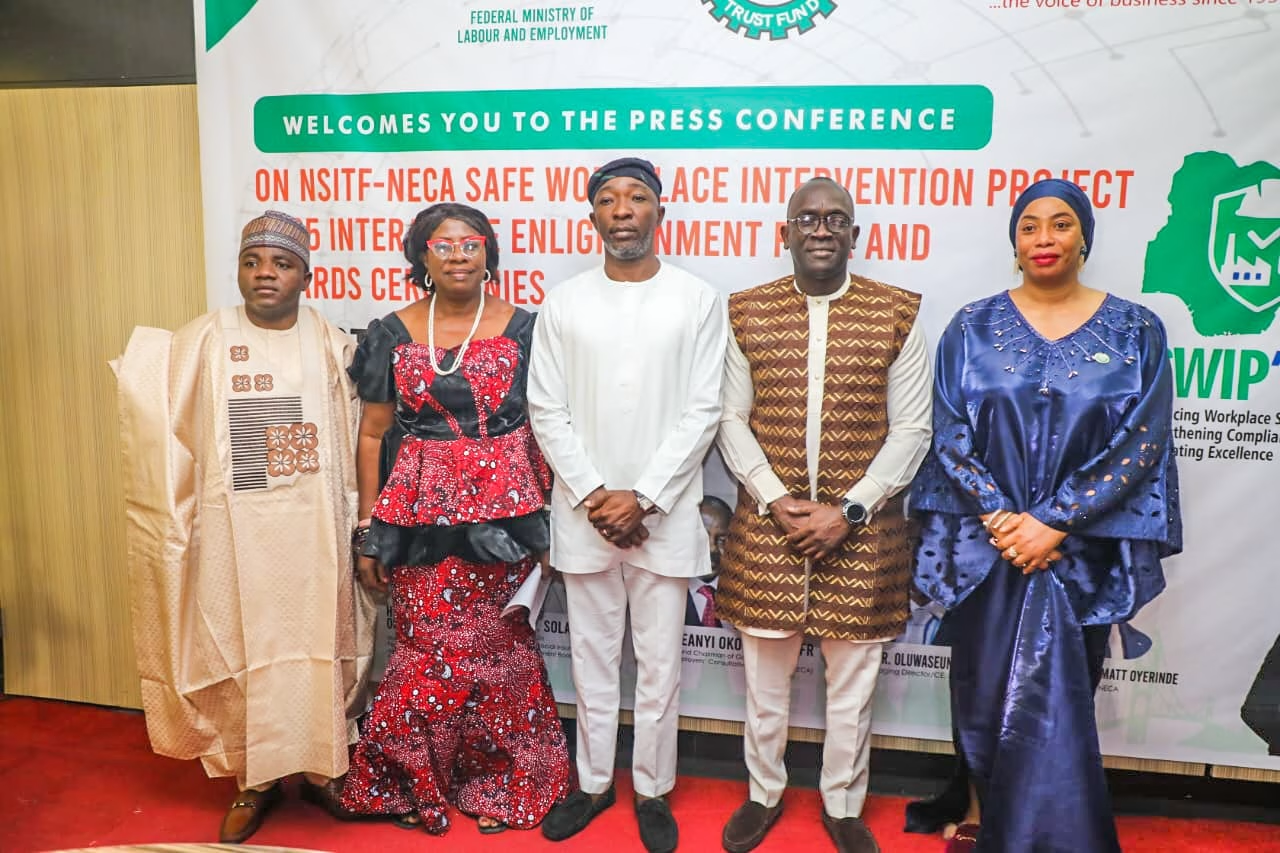
She therefore, called on all employers to institutionalise preventive safety measures urgently, while enjoining awardee organisations to become active ambassadors, share best practices and help lift their entire sectors, even as she urged NECA to “intensify advocacy and employers’ mobilisation.”
She further called on all stakeholders to “sustain and deepen collaboration by enhancing more evidence-based
inspections, faster interventions, stronger enforcement.”
Lastly, Mrs. Ali-Macauley urged “the media and the Nigerian public” to “keep occupational safety and health in the spotlight. Safe work is everyone’s responsibility and a foundation for national productivity and economic stability.”