
Speaker Abbas Proposes Reforms in Real Estate Sector, Seeks Investors Protection
..says systemic failures increase housing costs, discourage investment, reward fraud

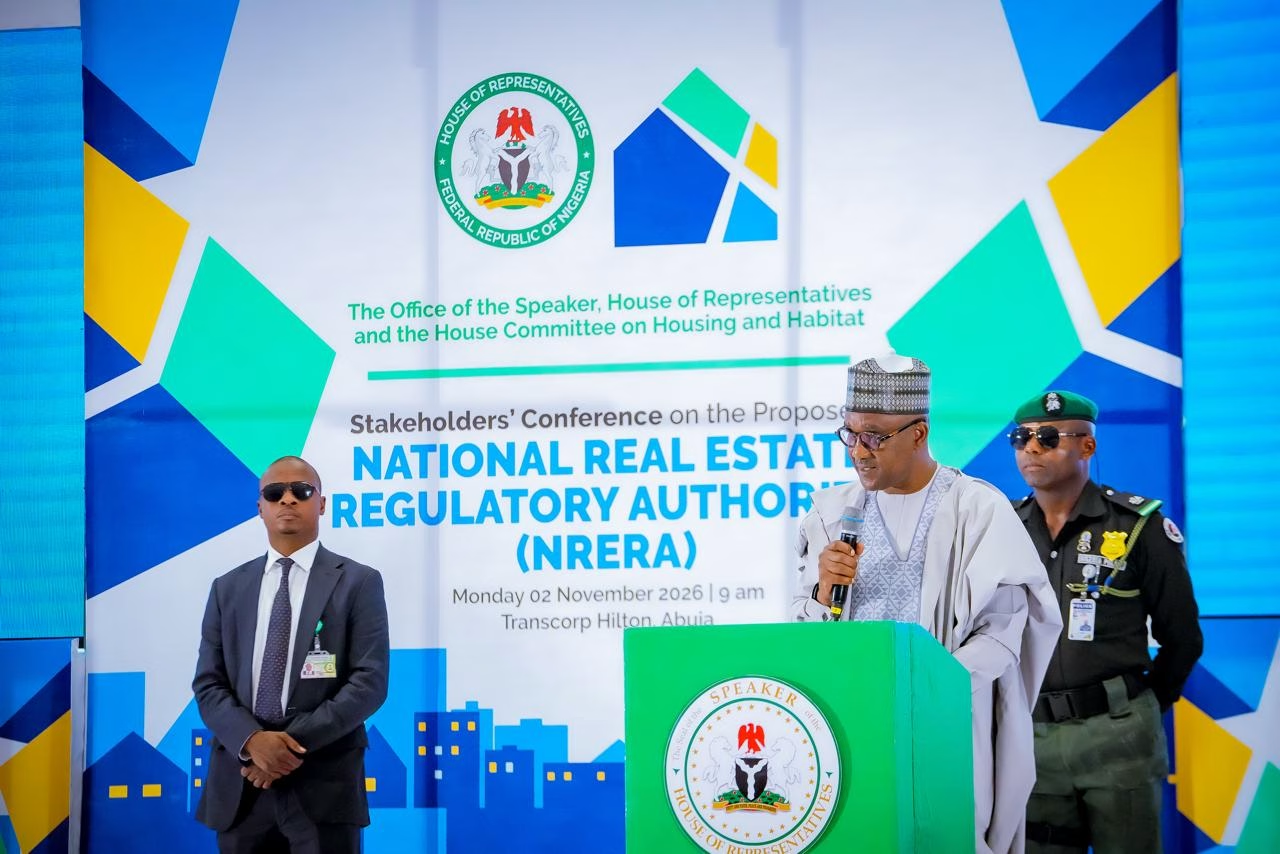

The Speaker of the House of Representatives, Hon. Abbas Tajudeen, has called for centralised and digitised real estate administrative systems that make processes less cumbersome for investor
Speaker Abbas also called for a linkage between the digital identities of the owner and a property, and between the seller and the buyer.
The Speaker made the call in his keynote address at the stakeholders conference on the proposed National Real Estate Regulatory Authority in Abuja on Monday.
The stakeholder engagement, themed ‘One Vision, One Ecosystem, One National Housing and Real Estate Plan,’ was organised by the Office of the Speaker in collaboration with the House Committee on Housing and Habitat.
In the address titled ‘Building a Trusted and Investable Nigerian Real Estate Market,’ Speaker Abbas said, “Nigeria does not lack property. Nigeria lacks enough trust in property.”
He added, “A buyer cannot always confirm who owns the land. A developer may spend years seeking approvals from offices that do not share information. A bank may reject a sound project because the title is difficult to verify. A family may commit its savings to a house that is sold twice, never completed, or never legally existed.
“These failures increase housing costs, discourage investment, and reward fraud. The purpose of regulation must therefore be clear.
“We are not here to create another agency. We are here to protect property, protect capital, and protect citizens. We are here to build a trusted market that attracts investment and delivers more affordable homes.”
Speaker Abbas stated that good regulation “is not a burden on honest business” but protection from dishonest competition.
He said, “We must also modernise title verification. Nigeria should develop Decentralised Identity Verification for Land Titles. This means connecting trusted records, not creating another isolated database.
“A secure digital identity should link each property to its state registry, survey, registered owner, planning status, and encumbrances. States would retain authority while common standards make verification possible across institutions.
“A title that cannot be verified cannot fully support credit. A market that cannot verify ownership cannot attract capital at scale.”
The Speaker stated that the first task is to treat real estate regulation as an instrument for protecting assets.
“For most families, a home is their largest investment. Developers commit substantial capital. Banks and pension funds need property assets they can trust. Yet, titles remain difficult to verify. Approvals are fragmented. Off-plan buyers lack adequate protection. Unqualified agents operate freely. Regulation must reduce these risks,” he said.
Speaker Abbas noted that the proposed National Real Estate Regulatory Authority should maintain a verifiable register of regulated developers, agents, and projects. He said buyers should be able to confirm an operator’s identity, licence, project approvals, and compliance history before making payment.
For qualifying off-plan developments, the Speaker said buyers’ funds should enter protected accounts and withdrawals should follow verified construction milestones.
He added, “A serious developer should not face endless approvals or rules that change without notice. Regulation must provide predictable timelines, transparent fees, and a clear appeal process.”
While noting that the second shift concerns innovation, Speaker Abbas emphasised that digital platforms are changing how property is advertised, financed, sold and managed. He said the law must protect citizens without blocking useful innovation.
He said, “I therefore propose a Legislative Sandbox Framework for PropTech. The sandbox should allow approved businesses to test products in a controlled, time limited environment. Reporting must be mandatory, and consumer exposure restricted.
“It should test electronic conveyancing, digital escrow, automated compliance checks, remote verification, and new housing finance models. But the sandbox must not become a safe harbour for fraud.
“No participant should escape consumer protection, data protection, or anti-money laundering rules. The Securities and Exchange Commission (SEC) must lead on securities. The Central Bank of Nigeria must act on banking and payments. Data protection authorities must guard personal information. States must remain responsible for land administration. The proposed Authority should coordinate these institutions. It should not duplicate them.”
The third shift is enforcement, says Speaker Abbas.
The Speaker noted that Nigeria already has many authorities touching the same transaction: state land registries, planning and building control agencies, professional boards, the Corporate Affairs Commission (CAC), the Federal Competition and Consumer Protection Commission (FCCPC), the Securities and Exchange Commission (SEC), the Nigerian Financial Intelligence Unit (NFIU), the Economic and Financial Crimes Commission (EFCC), and SCUML.
“Their mandates are not identical. But their records, approvals, and enforcement actions often fail to connect,” he stated.