
South Africa-Based Nigerian Scholar, Prof. Chijioke Okorie Awarded CA$740, 300 AI Research Grant


South African based Nigerian scholar, Prof. Chijioke Ifeoma Okorie has secured a CA$740 300 grant from the International Development Research Centre (IDRC) to the implementation intellectual property (IP) law within the emerging Artificial Intelligence (AI) development in Africa.
Prof Okorie, a researcher and Associate Professor in the Department of Private Law at the University of Pretoria, South Africa will collaborate with scholars in Canada, South Africa and other African countries in a project expected to last three years.
According to a statement posted on the website of the University of Pretoria, “Professor Chijioke Okorie from the Faculty of Law at UP was awarded the grant by the International Development Research Centre (IDRC) to lead a three-year research project titled ‘Catalyzing AI’s potential in Africa through intellectual property innovation’. This project is part of the Artificial Intelligence for Development program, a partnership between IDRC and the United Kingdom’s Foreign, Commonwealth and Development Office.”
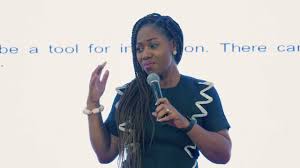
Experts note that while many AI policy debates now acknowledge the importance of IP frameworks, the role of such frameworks is often peripheral and poorly understood – especially in African contexts. This project aims to shift that narrative through targeted research, engagement and policy interventions designed to position IP as a central factor in enabling AI to meet Africa’s development objectives.
Prof Chijioke has been at the forefront of bringing Africa to the table of emerging development within the internet and AI tribes insisting that “Africa must define its own AI-IP policy narrative – collaborative, inclusive, and future-ready.”
Information available on the project show that the project will bring together African and international scholars through Prof Okorie’s long-time collaboration with the Open African Innovation Research (Open AIR) network. She will be working closely with key members of the Open AIR network: Dr Tesh W Dagne (York University), who is part of the Research Caucus body of Open AIR, and Professors Caroline Ncube (University of Cape Town) and Jeremy de Beer (University of Ottawa), who are both Open AIR Steering Committee members. Profs de Beer and Ncube will, on behalf of the Open AIR Steering Committee, serve as members of the Research Advisory Group for this project.
The project will also support the training of postdoctoral researchers and postgraduate students through initiatives such as the Data Science Law Lab’s Africa, Law & [Emerging] Technologies Policy Hackathon, thereby reinforcing a new generation of scholars working at the intersection of AI and IP.

Speaking on the critical significance of the project, Prof Okorie stated that, “African AI innovators are doing remarkable work, but they often operate within legal and policy environments that were never designed with AI in mind,”
“This project is about asking hard questions and offering real solutions: How do we ensure that intellectual property laws empower – rather than exclude – African innovators? How do we strike a balance between openness and protection? And what IP tools are needed to scale responsible, inclusive AI systems on the continent?”
By examining the role of IP across law-making, business models and community-based innovation, this project will generate policy-relevant insights, including handbooks,
A homegrown approach to AI governance
Rather than applying foreign policy templates to African contexts, the project emphasises co-created, locally grounded solutions. It draws on participatory research methods and targets tangible outcomes – from engaging IP administrators and national policymakers to informing positions in global fora like the African Union, African Regional Intellectual Property Organization (ARIPO) and G20/G7 platforms.
“IP innovation can truly catalyse AI’s potential,” Prof Okorie added. “Africa must define its own AI-IP policy narrative – and must do so collaboratively and strategically. To realise AI’s potential in Africa, we need an AI-IP policy that is context-aware and future-ready, inclusive and equitable – and one that reflects our development priorities. That’s what this project is about.”
About the International Development Research Centre (IDRC)
The International Development Research Centre (IDRC) champions and funds research and innovation within and alongside developing regions to drive global change. It invests in high-quality research in developing countries, shares knowledge with researchers and policymakers for greater uptake and use, and mobilises its global alliances to build a more sustainable and inclusive world.
Prof. Chijioke holds a PhD in intellectual property and competition law from the University of Cape Town, an LLM in Internet Law and Policy from the University of Strathclyde, Glasgow and an LLB from Nnamdi Azikiwe University, Awka, Nigeria. She was called as an advocate and solicitor of the Supreme Court of Nigeria in 2006.