
Nigerian Prisoners ‘List’ in Circulation Fake, FG, Explains Prison Transfer Agreement with Ethiopia

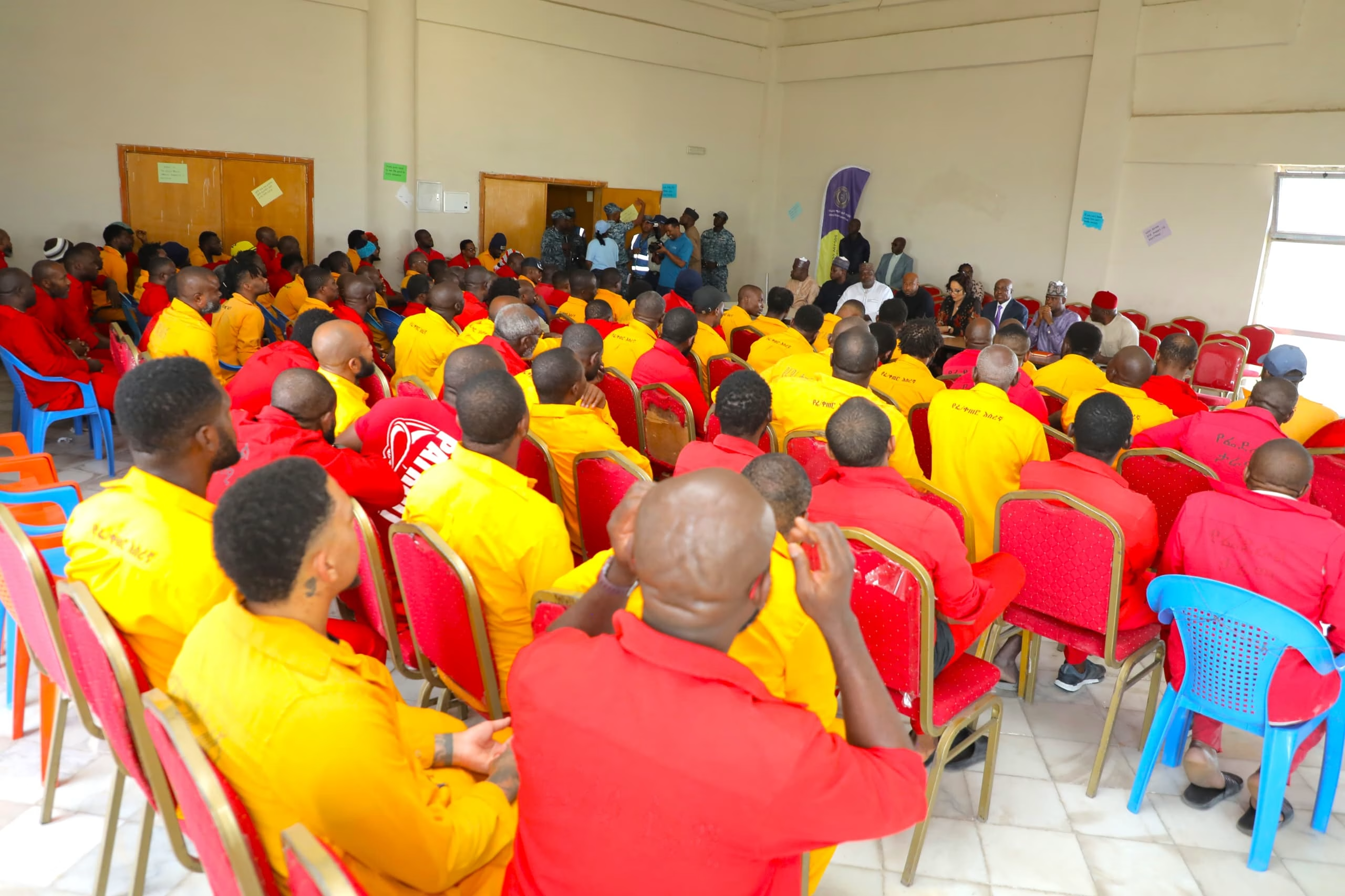

The federal government has clarified why it recently signed Transfer of Sentenced Persons Agreement with the Federal Democratic Republic of Ethiopia.
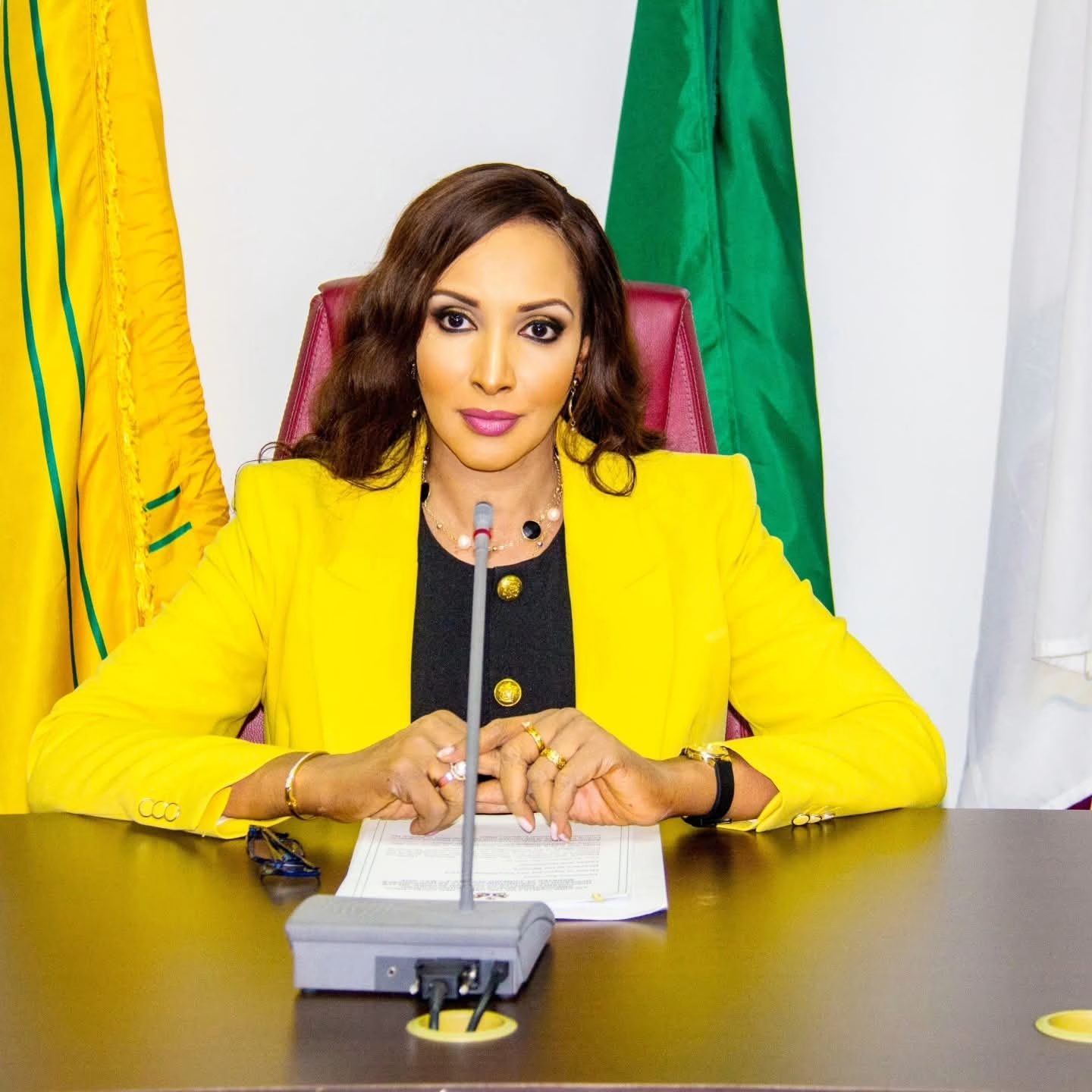
Minister of Foreign Affairs, Ambassador Bianca Odumegwu-Ojukwu explained that the important diplomatic milestone was in line with the citizen diplomacy policy of the Renewed Hope Administration of President Bola Tinubu which places priority on the Nigeran diaspora. She disclosed that efforts were on to intervene in the cases of other Nigerians imperilled in parts of the world.
Odumegwu-Ojukwu dismissed the purported list circulating in various media platforms as the names and numbers of Nigerian inmates in Ethiopia prisons as fake, insisting that Nigeria did not have 136 inmates in that country. The minister also described some of crimes attributed to them as “wild tangent.”
She said that the government was determined to bring the inmates home to serve their sentences with dignity without exposing them to inhuman conditions.
Odumegwu-Ojukwu who disclosed that the efforts to secure the prisoner transfer deal started a long time ago also stated that Nigerian inmates in Ethiopia had variously complained of precarious conditions there.
She said: “We have been working for so many years to get these prisoners back home to Nigeria. We had difficulties because it was hard to actually get the actual numbers of the prisoners in Ethiopia. Now, in those prisons, they were spread across Kaliti prisons and Aba Samuel prisons; these are maximum security prisons. We needed to sign this agreement on the transfer of sentenced persons. Essentially, what it means is that if prisoners have been sentenced in one country and they are serving a jail term in that country, they can return to their state or country of origin, to serve out the sentence itself. And this is very, very important because the inmates in those prisons have been agitating for so many years to return back to Nigeria to complete their jail terms. This is in view of their precarious living conditions, health challenges, inadequate medical facilities, poor feeding, denial of visitation rights, they didn’t have adequate legal services and there was also language barrier among other things. So really, we had to expedite action.”
She reiterated that four Nigerian prisoners had died in the space of time it took for both countries to finalise the agreement. “Some of these young people that I saw when I went into that prison, they could have been anybody’s brother. They’re young, vulnerable, impressionable. And when you’re that young and you are a victim of a syndicate and you are promised so much, because of the ignorance; a lot of them are ignorant. So, should they be faced with such a precarious situation for one mistake,” the minister queried.
The minister also defused concerns in some quarters that the inmates would be freed on their return to the country.
According to her, one of the provisions of the memorandum of understanding is an undertaking not to grant pardon or amnesty for the person requested to be transferred without the consent of the sentencing state.
She further debunked the allegation that the inmates are from one region of the country, explaining that crime has no ethnicity or tribe.
“The list trending online is a made-up list. We don’t have 136 inmates in Aba Samuel and Kaliti prisons. Those that are subject of this agreement, transfer of sentenced persons, are 98 inmates of that prison. A lot of them are from the Southeast. There are also those from the Southwest, from the South-South. So, really, at the end of the day, crime has no ethnicity. All these people are Nigerian citizens. Nigerian citizens in a foreign jail,” the minister stated.