

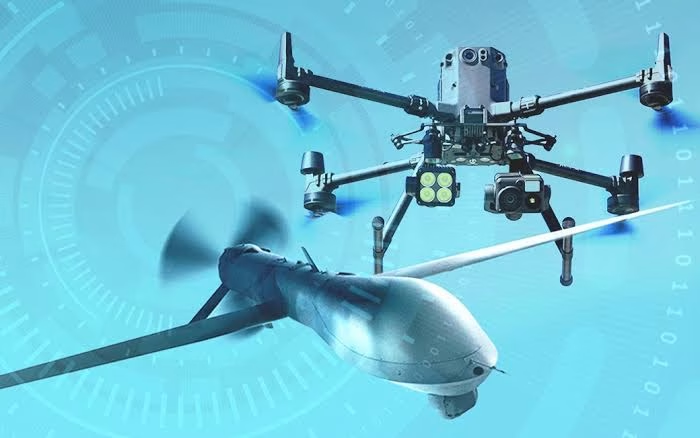

The House of Representatives at plenary on Wednesday passed through second reading a bill seeking for an Act to move the nation beyond dependence on imported technology towards developing its own capacity to design, manufacture and commercialise drones.
The proposed legislation titled, “Bill for an act to provide for the development, promotion and industrialisation of the nigerian drone industry; and for related matters,” was sponsored by the Deputy Speaker, Rt. Hon. Benjamin Kalu and 12 others.
Leading the debate on its General principles, one of the co-sponsors, Hon. Satomi Ahmad said the Bill seeks to establish a legal and institutional framework for the development, promotion and industrialisation of Nigeria’s drone industry.

He explained that it focuses on indigenous research, design, manufacturing, commercialisation; reducing dependence on imported technology; building local content and technical capacity; attracting investment; creating jobs; and positioning Nigeria as a competitive regional and international centre for drone manufacturing and related services.
Ahmad lamented that Nigeria’s dependence on imported technology limits opportunities for local innovation, job creation and industrial growth and without coordinated support for manufacturing, commercialisation, indigenous enterprises may struggle to translate promising ideas into viable products.
He therefore urged his colleagues his colleagues to support the Bill as it seeks to address these gaps through targeted incentives, government procurement preferences, innovation funding and local-content requirements.
He expressed optimism that the bill will transform Nigeria from a consumer of drone technology into a producer of
indigenous solutions, skilled professionals and competitive industrial products, adding that its successful implementation could stimulate investment, create employment,
strengthen national security and open new markets for Nigerian innovation.
The lawmaker said, “It is important to note that the future belongs to nations that can transform technological innovation into industrial capacity, economic prosperity and national security. Drone technology is increasingly vital to agriculture,
infrastructure, emergency response, scientific research and defence. Nigeria must therefore move beyond dependence on imported technology towards developing its own capacity to design, manufacture and commercialise drones.
“The Bill also provides safeguards for aviation safety, cybersecurity, data protection and national security, while preserving the statutory functions of
relevant regulatory and defence authorities. It therefore seeks to balance industrial advancement with responsible technological development. This Bill which seeks to establish a framework for building a competitive indigenous drone industry through local manufacturing, research, investment, technology transfer and skills development contains 49 Clauses divided into 12 Parts.
“Creates the National Drone Industrialisation Council to coordinate policy, targets, incentives, partnerships, industrial zones and export development. National policy: Requires a National Drone Industrialisation Policy within 12 months of enactment, with measurable local-content, employment, research, manufacturing and export targets. Performance-based incentives: Provides for customs/import-duty concessions, Research & Development tax credits, accelerated capital
allowances, grants, concessionary financing, certification support and infrastructure/investment support, subject to conditions.”
When put to a voice vote, the Bill was passed and referred to relevant committee for further legislative action.