
Ezekwesili to Senate: Stop Weaponising Laws Against Akpoti-Uduaghan, Nigerians

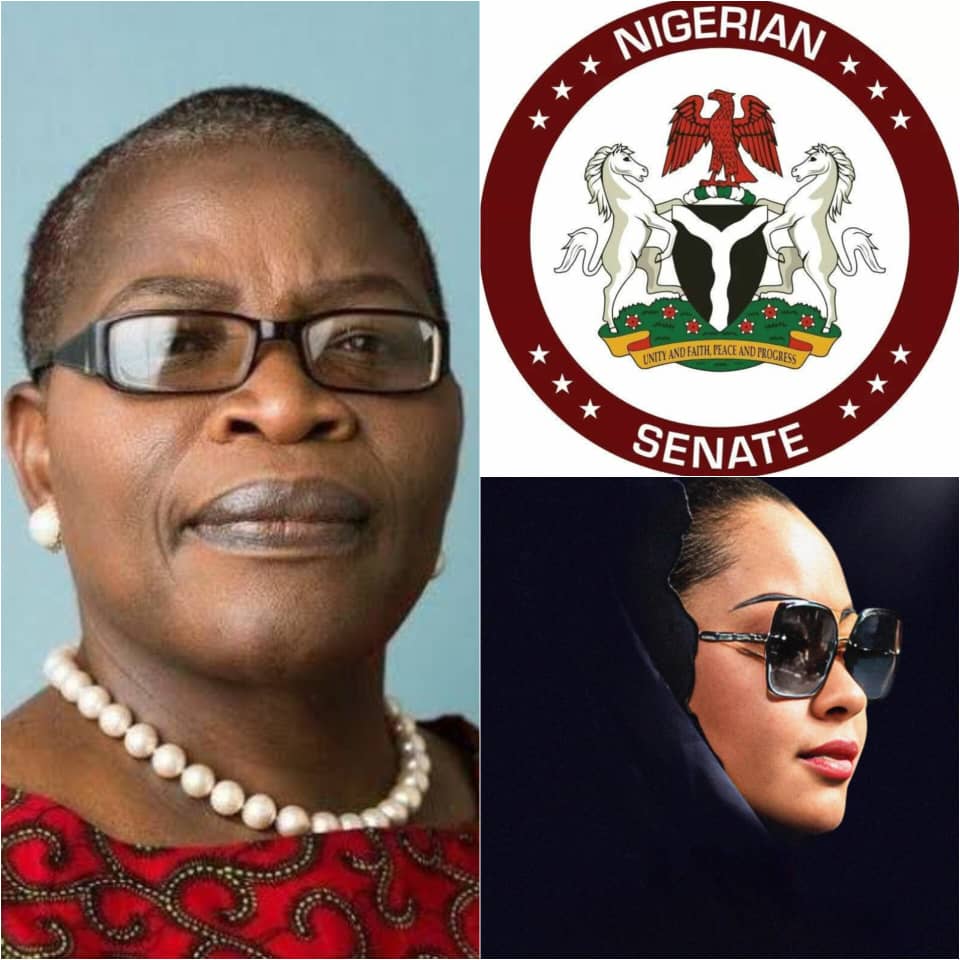
By Uzomaka Mfoniso
Former Education Minister and governance advocate, Dr. Obiageli Ezekwesili, has issued a strong worded memo indicting the Nigerian Senate of abusing its constitutional powers in the ongoing suspension saga involving Senator Natasha Akpoti-Uduaghan.
The suspension, now in its sixth month, has become one of the most contentious constitutional battles in Nigeria’s Fourth Republic. Ezekwesili described the indefinite extension as nothing short of “an existential threat to Nigeria’s constitutional democracy.”
“Democracy dies when laws become weapons and lawmakers become serial lawbreakers,” she declared in the strongly worded statement released on Tuesday, September 9, 2025.
Senate Versus Constitution
Senator Natasha Akpoti-Uduaghan, the first femalr representative of Kogi Central, was suspended on March 6, 2025, after raising an allegation of sexual harassment against Senate President Godswill Akpabio. In a swift reaction, the Senate suspend her, imposing a seven-point punishment that included office lockout, withdrawal of security, and salary suspension.
Ezekwesili condemned the Senate’s September 4 letter, signed by the Acting Senate Clerk, which claimed her suspension would continue indefinitely because the matter was “sub judice.”
“The Senate cannot use pending litigation as justification to prolong an already unconstitutional suspension that has exceeded its own prescribed limits,” she argued.
Legal experts agree. Order 67(4) of the Senate Rules permits suspension for a maximum of 14 days, yet Akpoti-Uduaghan has been out of the Red Chamber for over 180 sitting days — denying her constituents any democratic representation in Nigeria’s highest legislative chambers.
Ezekwesili warned that this breach represents a direct assault on democratic accountability:
“Suspending a lawmaker for six months when the National Assembly sits for only 181 days annually effectively denies constituents their right to representation. This constitutes a fundamental violation of the democratic contract.”
Judicial Precedent Ignored
The Federal High Court, presided over by Justice Binta Nyako, had earlier ruled that the six-month suspension was “excessive” and unconstitutional. That judgment followed earlier precedents in 2017 and 2018, when the courts declared long suspensions of lawmakers “illegal, unlawful, and unconstitutional.”
Yet, Ezekwesili argued, the Senate continues to act with impunity.
“When the legislative arm can ignore judicial restraints with impunity, we witness the erosion of the separation of powers that forms our constitutional democracy’s bedrock.”
She called on the Chief Justice of Nigeria and the National Judicial Council to intervene decisively:
“The fastest conclusion of the Akpoti-Uduaghan case is imperative for the courts to prove to Nigerians that they are not complicit in undermining the rule of law.”
Ezekwesili also drew attention to how the Senate Ethics Committee mishandled Akpoti-Uduaghan’s petition.
“Recall how the Senate Ethics Committee chairman declared Akpoti-Uduaghan’s petition ‘dead on arrival’ before investigation, stating ‘Akpabio could not have committed sexual harassment.’ That prejudgment revealed a system designed to protect power rather than pursue truth,” she said.
This, she argued, underscored why citizens must not dismiss the case as a mere personal quarrel.

“Such a view terribly misunderstands the stakes. The Akpoti-Uduaghan versus Akpabio matter reveals how those entrusted with constitutional power act with impunity.”
The People, Not the Senate, Hold Power
For Ezekwesili, the case transcends one Senator’s fate. It is about the power dynamics between Nigeria’s citizens and its ruling elite.
“The Constitution grants citizens more power than those in office. However, when majority of our citizens remain unconcerned instead of demanding accountability collectively, constitutional breaches like Senate President Akpabio’s will continue to compound and endanger all.”
She warned that silence from Nigerians would only embolden further abuse of office:
“If a duly elected Senator can be silenced for exercising constitutional rights to petition and speak, what protection exists for ordinary citizens?”
A Call to Action
Ezekwesili urged both the Senate and ordinary Nigerians to act swiftly before irreparable harm is done to democratic norms.
To the lawmakers, she said:
“Rescind your unconstitutional decision immediately. Recall Senator Akpoti-Uduaghan without delay. Cease your scandalous misappropriation of public office powers to break laws and breach our Constitution. Demonstrate that Nigeria’s commitment to justice, constitutional governance, and rule of law is substantive, not rhetorical. End this hubris now.”
And to citizens;
“Unify our voices and take a collective stand against this continuing constitutional assault. Six months of this crisis is already too many. Every day without remedy chips away at democracy’s foundation. Every moment court orders are defied by those in power teaches our children that law is optional for the powerful.”
Why This Matters
By the numbers:
The Constitutionally mandated annual sitting days of the National Assembly is 181 days.
The 6+ months Length of Akpoti-Uduaghan’s suspension, has now now extended indefinitely and left at the mercy of the judiciary.
This amounts to 100% disenfranchisemen resulting in the effective loss of legislative representation by the Kogi Central constituents whe rely on their representative for the dividends of democracy from the government at the center.
14 days is the legally back maximum suspension allowed under Senate Rules, according to legal experts.
Ezekwesili concluded her memo with a sobering caution:
“The Senate President and 107 Senators are not more powerful than Nigeria’s people. A word is sufficient for the wise, including those who despise wisdom.”
Senator Natasha Akpoti-Uduaghan is the first female lawmaker elected from Kogi Central. Her suspension followed her petition against Senate President Akpabio. Legal scholars argue her case could define the limits of legislative power in Nigeria’s constitutional democracy.