


By Jerry Uhuo, PhD
Every election season in Nigeria arrives with a familiar script, in which incumbents recast the ballot as a formality. For politicians seeking re-election, it is usually a quest for power coronation rather than a contest for people’s mandate to lead them based on track records.
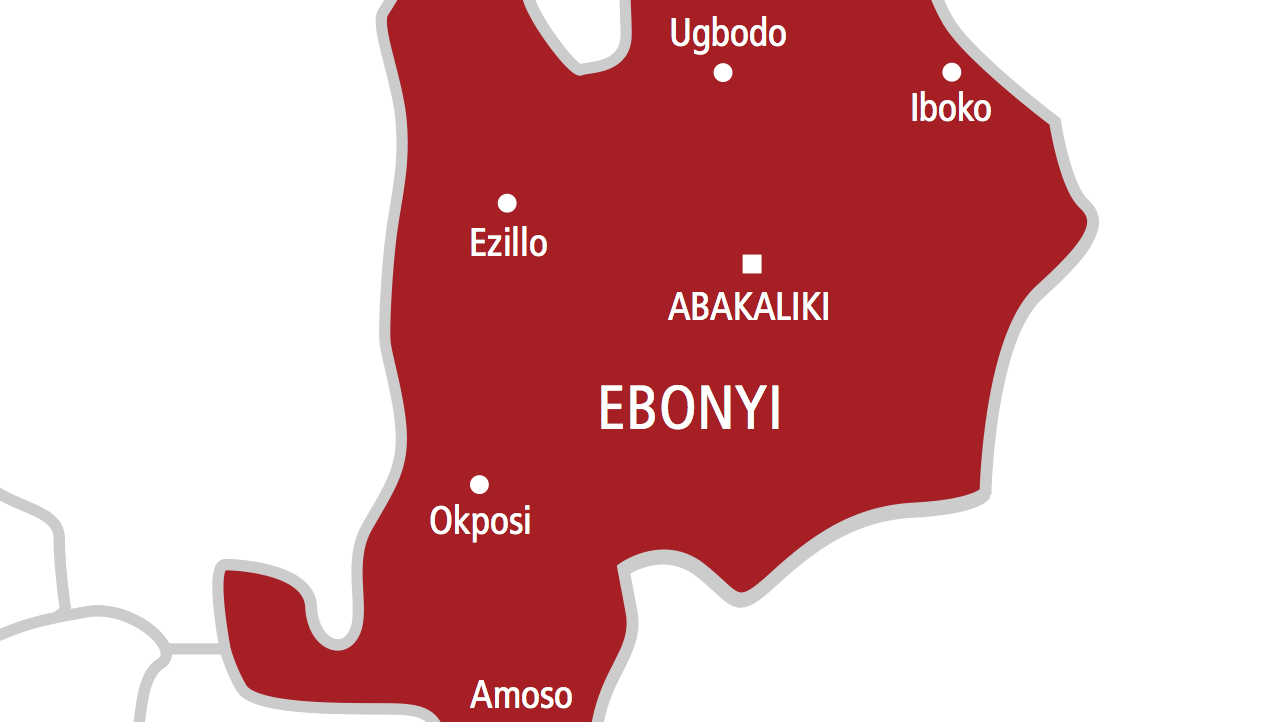
Such politicians usually attempt to cajole citizens by all means possible to believe or treat their re-election as an entitlement that flows automatically. Ebonyi State approaches 2027 election under the weight of that same script, as Governor Francis Nwifuru’s administration appears to assume that his second term bid is an entitlement that must not be challenged by anyone. On the contrary, democracy even at its worst, does not operate on that assumption, and neither does the law that governs it permits same.
An electoral mandate especially in our type of democracy, is a contract renewed only on the strength of performance and constitutional process, not a title passed down by default because a term has expired.
As Ebonyi voters weigh what comes next in the 2027 governorshipelection, the central question cannot be who commands the loudest campaign machinery or the most visible endorsements. It must be a sober accounting of what the first term delivered, placed side-by-side against both the promises made and the legal framework that governs how a second term is actually won.
Incumbency only confers visibility, state resources, and the machinery of government, but none of these translate automatically into a claim on re-election. A governor seeking a second term is not owed continuity; continuity is earned by demonstrating that the resources entrusted to a government were converted into visible, functioning outcomes for the people who provided the mandate in the first place. Where that conversion did not occur, incumbency becomes a liability rather than an asset, because the same administration that failed to deliver is now asking for four additional years without having accounted for the first four.
The argument at the centre of this piece is straightforward and rests on two pillars: performance and law. Ebonyi State’s choice in 2027 must be anchored on the verifiable record of the last four years, not on political sentiment, ethnic loyalty, or the persuasive power of campaign rhetoric, and it must also be understood correctly as a matter of constitutional fact.
A second term should function as a reward for demonstrated competence, not a consolation extended based on the privilege of incumbency, party discipline, or zoning slogan. In Ebonyi State, Nwifuru’s governance record shows a preposterous and heartbreaking democratic deficit: unfinished works, unexplained expenditure, and unmet promises. Renewing that mandate on this record would mean rewarding failure, and no electorate serious about its own development does that with open eyes. This flows from the age-long principle of emancipation, where it is not permitted or noble to reinforce failure.
Nowhere in the Constitution of the Federal Republic of Nigeria,1999, (as amended), is a governor guaranteed a second term in office. Section 180 of the Constitution, which governs the tenure of state governors, fixes the term at four years from the date a governor takes the Oath of Allegiance and Oath of Office, and permits a second four-year term only where the governor is re-elected. Re-election is at the discretion of the people, earned through performance and demonstrated leadership.
The Supreme Court’s interpretation in Marwa v. Nyako read Section 180 as prescribing a single term of four years, extendable by exactly one further term of four years where the governor is re-elected, and not a day longer. The provision caps how long a governor may serve; it does not, at any point, confer a right to that second term. The word the Constitution uses is conditional, not automatic, and that distinction is the entire foundation on which the case against unquestioned renewal rests.
This distinction matters because political culture in Nigeria has, over time, blurred it. Campaign language routinely describes a second term as something an incumbent “deserves” or is “entitled to”. Unfortunately, such narrative has no constitutional basis and that quietly substitutes political convention for legal fact. The Constitution treats a sitting governor seeking re-election as a candidate subject to the same electoral requirements as anyone else contesting that office, not as an officeholder with a reserved claim on continuity.
This constitutional clarity should guide the entire second-term conversation in Ebonyi State. The discussion Ebonyi citizens ought to be having is not whether Governor Francis Nwifuru will get a second term, but whether the record of his performance meets the threshold the people are entitled to expect. It is not a matter of entitlement to return to office because those before him were re-elected, or because of a zoning slogan. It is a matter of merit, tested against performance.
The mechanism of how a governor is elected reinforce the same point. Section 179(2)-(a-b) of the Constitution requires a governorship candidate (without any exception to an incumbent governor seeking re-election) to secure not the highest number of votes alone, but that number of votes combined with not less than one-quarter of the votes cast in at least two-thirds of the state’s local government areas, failing which the law mandates a second round of voting between the two leading candidates. The threshold set by law is clear and it applies equally to a first-time candidate and to a sitting governor seeking re-election. The Constitution does not lower the bar, waive a requirement, or create an easier pathway for incumbents; it holds every candidate, including the one already in office, to the same electoral test administered by the Independent National Electoral Commission under the Electoral Act.
The combined reading of sections 180 and 179 establishes a system in which a second term is a prize to be won through a fresh contest, not a status carried over from the first. This legal architecture exists precisely because Nigeria’s constitutional drafters understood the danger of treating incumbency as self-perpetuating, being a danger the country’s history under military and quasi-democratic rule made concrete. For Ebonyi voters, this means the cajoling rhetoric of 4+4 or automatic renewal of mandate is not merely politically convenient for those defending an underwhelming record; it is constitutionally inaccurate. The law offers no shortcut past performance, and no governor, regardless of office or influence, can lawfully claim one. It is therefore interesting to note that Section 1(1)-(2) of the Constitution of the FRN 1999 (as amended) proclaimed the supremacy of the constitution over all authorities and persons, and authoritatively proclaimed further that the Nigeria or any part thereof shall not be governed except in accordance with the provisions of the Constitution.
Ebonyi State’s electorate did not ask for extraordinary feats in 2023 when GovernorNwifuruwas elected. It asked for the ordinary competence that governance requires, delivered consistently across the thirteen local government areas that make up the state, and it is against that ordinary standard, not an inflated or unfair one, that the record must be measured.
Consider the agricultural empowerment programme designed for councillors across all thirteen local government areas. Funds were reportedly released for the initiative, yet the intended beneficiaries were left without the training and support the programme promised, a gap documented by participants who took part in the early stages and were subsequently left behind. A programme conceived to strengthen grassroots agricultural capacity instead became another line item that consumed a budget without producing the outcome it was designed for an early signal of the pattern that reoccurs throughout this record. Thus, the allegations of financial impropriety involving deductions of the amount approved further subjects the programme to unanswered questions and failure.
The Secondary Education Board’s teacher recruitment exercise tells a similar story. A recruitment drive meant to address staffing gaps in public basic education system was announced and then left unresolved, with no clear conclusion communicated to the public. Years into the administration, the payment of few of the applicants who were deployed was abandoned at the mercy of L.G.As for remuneration, while Governor’s media aide in their usual optic stunt created a narrative that the State government recruited 2000 teachers. Nonetheless, the exercise remains suspended in the same uncertainty in which it began, leaving classrooms and students to absorb the cost of an administrative inertia that a functioning process would have avoided.
Across the state’s communities, the two-kilometre road projects follow the same arc: budgeted, approved, and then abandoned before completion. This is not the story of one contractor’s failure or one community’s misfortune. It is a pattern that repeats across multiple communities, which is precisely what separates an isolated setback from a structural failure of project management and public accountability. Where a budget line exists and a road does not, the gap between the two is the clearest evidence a resident can ask for.
The special schools initiative suffered an identical fate. Conceived with public fanfare and captured in the state’s budget documents, the project stalled before it could deliver the specialised educational infrastructure it promised, leaving behind only the paperwork that once justified its funding. This usual pattern resulted in the fatality of fate for families who depend on the state to provide education facilities they cannot otherwise access, because, the whole arrangements was a promise memorialised only in a budget document which offers no practical relief.
More so, workers were told to expect a minimum wage of seventy thousand naira, a commitment announced publicly. It later became discretionary and discriminatory based on categories of staff. For many other civil servants living on the promise of that increase, the gap between announcement and implementation is not an abstract policy delay; it is the difference between meeting household obligations and falling behind on them, month after month, while the cost of living continues to rise around them.
The palace-building project for the state’s traditional rulers was approved at fifty million naira per palace, with funds reportedly released to begin construction. Years later, many of these structures remain abandoned and/or uncompleted and the state has yet to offer the public a clear account of why funds released for a specific, budgeted purpose failed to produce finished buildings. Where public money is committed to a project and the project does not materialise, the public is owed an explanation, not silence, and the traditional institutions the project was meant to honour are owed the same.
Civil servants and pensioners across the state have also had to contend with irregular and delayed payments, a hardship that falls hardest on those with the least capacity to absorb it. A government’s treatment of its own workforce and retirees is one of the clearest, least deniable indicators of administrative discipline, and irregular payment cycles suggest that this discipline has been in short supply precisely where it should be most reliable. The recent alleged payment of some pensioners covering somw years of arrears, may offer temporary relief, but Ebonyians are still owed an answer to a more basic question: what is the sustainable mechanism going forward?
The Vanco flyover and tunnel project has drawn sustained public criticism, with a diaspora advocacy group describing the unfinished structure as having turned into standing water during the rainy season rather than functioning as the traffic corridor it was designed to be. Meanwhile, many families and businesses displaced by the government for the project are still suffering at different levels. A flagship project stalled in this manner does more reputational damage than an unannounced one, because it advertises intention publicly without matching that intention with delivery, leaving residents to measure the distance between promise and pavement every time they pass the site.
The proposed Ebonyi Airline and its companion project, a university of aeronautical science in Onueke, were announced with the kind of ambition that suggested a state positioning itself for a new economic identity. Both initiatives have gone quiet since their announcement, joining a list of high-visibility projects that generated headlines without generating outcomes, and reinforcing a pattern in which the scale of an announcement bears no relationship to the likelihood of its completion — even as over fifty billion naira of taxpayers’ funds is alleged to have been lost to scavengers in the acquisition of aircraft.
The hawkers’ empowerment scheme, for which a reported one billion naira was approved, has drawn concern from residents and observers who question how the funds were disbursed and to what end. These are serious claims that deserve a serious answer from the government, and until the disbursement committee’s records are made public and independently verified, the accurate description of this episode is that it remains unresolved and in need of scrutiny, not settled fact.
None of this catalogue exists in isolation, and none of it can be explained away by a shortage of resources. Comparable Nigerian states, working with similar or smaller federal allocations, have shown that functioning roads, timely wages, and completed public infrastructure are achievable within a single term when governance discipline is applied consistently. The test for Ebonyi’s government was never whether resources were scarce; increased federal allocations in recent years suggest the opposite. The test was whether those resources would be converted into results the average resident could see, use, and depend on, and on that test, the record falls short.
A second term is meant to be Ebonyi’s endorsement of a government that has proven itself capable of turning public resources into public good, secured through the same competitive, majority-tested process the Constitution prescribes for every candidate. What the record instead shows is a pattern of announcements without completion, budgets without delivery, and promises without accountability. Voters who accept this record as sufficient grounds for renewal are not rewarding governance; they are normalising its absence, and setting a precedent future administrations will be quick to exploit.
Ebonyi people face a choice that will define the next four years and, in many respects, the credibility of accountability in the state’s politics going forward. The Constitution guarantees a governor the right to contest for a second term; it does not, and was never designed to, guarantee that the contest be won.
A second term should be earned through demonstrated competence and secured at the ballot box, not assumed through the passage of time or the weight of incumbency. Until Governor Nwifuru’s administration accounts fully for the promises catalogued here, automatic renewal is not a reward the record supports, and no community serious about its own development should extend it on faith alone. That is why democracy offers a platform for choices. The choice before Ebonyi people in 2027 is between electing someone with capacity, competence, and demonstrated performance in the person of Chief Ifeanyichukwuma Odii, and reinforcing the failure that the administration of Governor Francis Nwifuru has shown.
Jerry Uhuo, a public policy specialists writes from Abuja