

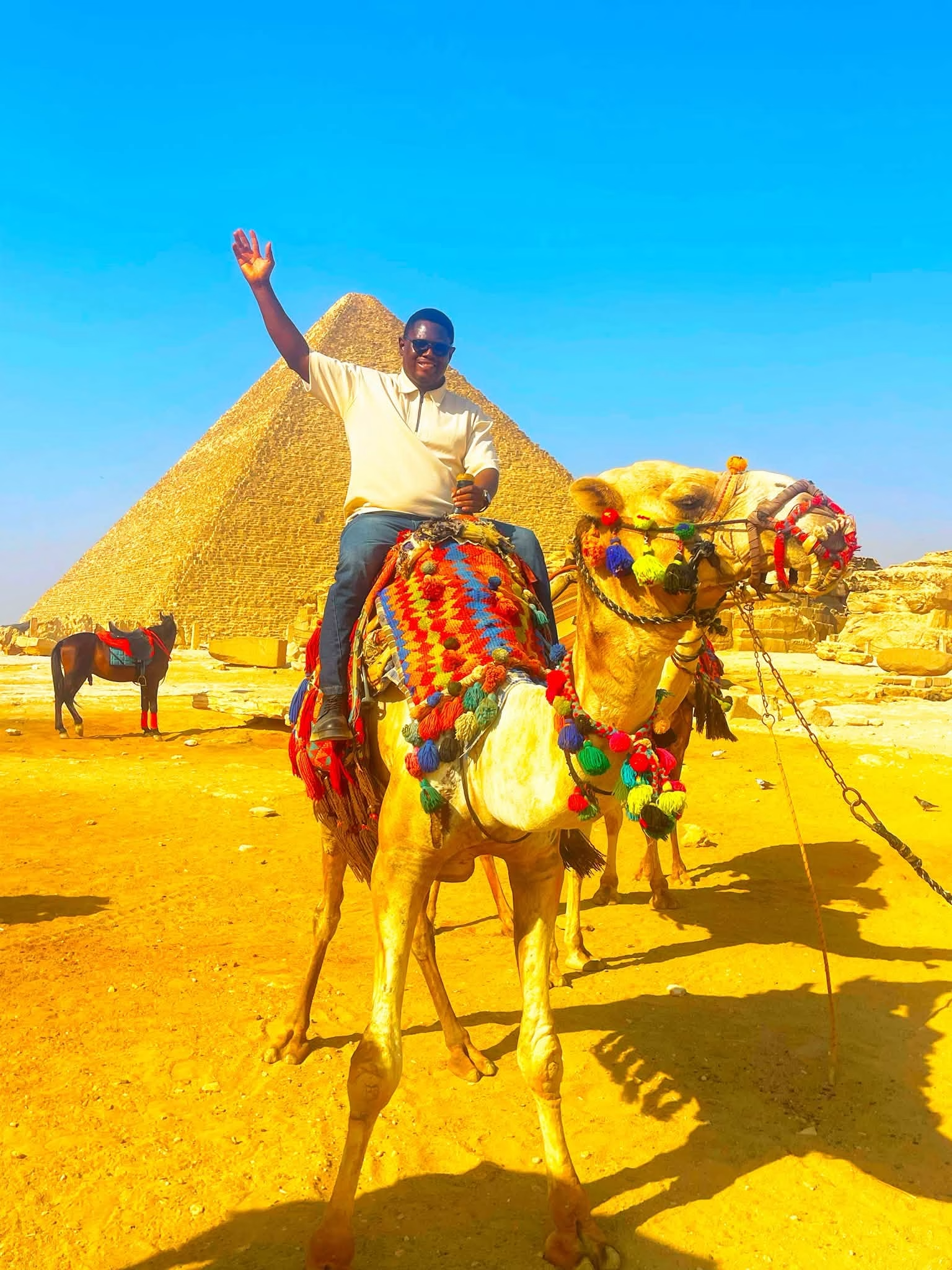

Ezrel Paul Tabiowo
Before you decide to touch, climb, or intimately interact with the Giza pyramids, you should understand that these structures are active, charged monuments that have elicited both awe and fear for millennia. As such, a word of caution is necessary.
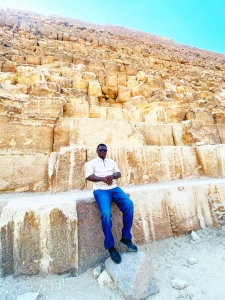
While many Western and modern secular tourists view the pyramids through a purely historical or architectural lens, a very real fear of spiritual and supernatural consequences persists for others. Popular culture has heavily promoted the idea of the Mummy’s Curse, suggesting that disturbing or touching royal Egyptian structures brings bad luck, illness, or misfortune. Local Egyptian folklore is even older and deeper, filled with centuries old stories of djinn, spirits that protect the pharaonic treasures. Some regional visitors treat the ruins with a cautious distance out of respect for these unseen forces. Whether you believe in these warnings or not, you should know that physically engaging with the pyramids carries a weight that goes far beyond the physical.
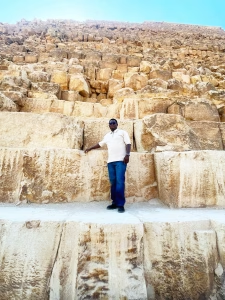
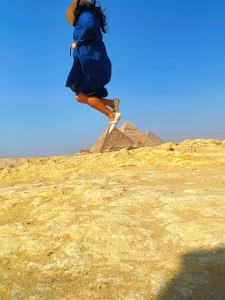
My own experience was a shift from being a passive sightseer to an active participant. I engaged with the structure exactly as its ancient architects intended, treating it as a physical gateway between the earth and the sky. Standing at the base, I felt the scale of human history as a physical weight. The limestone blocks, each weighing as much as a car, stack upward into the hazy Egyptian sky until they seem to swallow the sun. I did not just want to see the pyramids. I needed to touch them, to feel the granular, sun baked texture of the bedrock against my palms. I was fortunate to have a rare, quiet opportunity to climb onto the first tier stones. They are not stairs built for human feet. They are massive, chest high ledges demanding that you stretch, pull, and lift your entire body weight to ascend. When I stood on that tier, pressing my hands flat against the stone, the world below felt silent.
Before I even approached the Sphinx, my guide gave me an incredibly authentic piece of local insight. For thousands of years, the Great Sphinx of Giza was not viewed merely as a statue. It was feared, respected, and worshipped as a living, divine protector of the plateau. Getting spiritual protection before going close to it ties directly into ancient Egyptian religion, local folklore, and traditional rituals. To the ancient Egyptians, the Sphinx was a physical manifestation of the sun god, specifically named Horemakhet, meaning Horus in the Horizon. Because it faces directly east to meet the rising sun every morning, it was believed to hold immense solar energy. Ancient travelers, princes, and pharaohs would not dare approach the Sphinx without first making an offering at the mud brick temple right between its giant paws. They would pray for its favour, asking the god to grant them safe passage and protection from the unseen spirits of the desert. The most famous historical example of this happened to a young prince who later became Pharaoh Thutmose IV. Around 1400 BCE, the prince fell asleep in the shadow of the Sphinx’s head while the rest of the body was buried in the desert sand. The Sphinx spoke to him in a dream, claiming it was choking on the sand. It promised him that if he cleared the sand away, it would protect him and make him the next King of Egypt. He did it, became Pharaoh, and erected a massive stone slab called the Dream Stele directly between the Sphinx’s paws, where it still stands today.
In Egypt, the Sphinx is traditionally called Abu al-Hol, which translates literally to Father of Terror. Local lore views the Sphinx as the eternal sentinel guarding the vast network of tombs and tunnels beneath Giza. It was believed that the Sphinx possessed a fierce spiritual force called heka, capable of striking down anyone who approached it with disrespect, negative intentions, or without a pure mind. Seeking protection or clearing your energy before standing in its shadow was a way to ensure the Father of Terror remained your protector rather than your adversary.
Even though I was standing a safe distance away and just taking a forced perspective photo where it looks like I was interacting with the Sphinx, my guide’s advice about protection still carried an interesting meaning in that exact spot. The viewing platform where tourists stand to take those photos sits right next to the Valley Temple. In ancient times, this area was a highly active ritual zone where the energy of the Sphinx intersected with the funeral rituals of the pharaohs. Many locals believe that even standing near this axis exposes you to the intense spiritual gravity of the plateau.
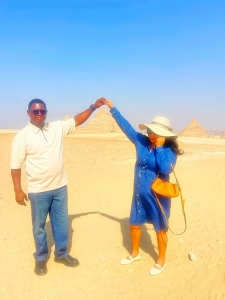
One of the most surreal parts of my visit happened away from the Great Pyramid itself. My guide took me and my wife on a horse ride through the tombs built on the right side of the plateau. This was not a typical tourist bus route. We rode slowly through the sand, passing ancient mastabas and rock cut tombs that stretch across the desert like a silent city of the dead. The horse’s hooves were quiet on the soft ground. Those tombs, built for nobles, priests, and royal officials, are far less visited than the pyramids, but they are just as significant. They form a vast necropolis, a city designed for the afterlife, arranged so that the dead would be close to their king and to the gods. The tombs on the right side, east of the pyramids, face the rising sun, the direction of rebirth. To the ancient Egyptians, this was the side of life, while the west, where the sun set, was the side of death. By riding through these tombs, I was crossing a spiritual boundary that has existed for over four thousand years.
The tombs themselves are stunning. Many are cut directly into the limestone bedrock, their entrances framed by simple pillars or carved lintels. Some still contain traces of faded hieroglyphs, and scenes of daily life. These images were functional magic, designed to ensure that the tomb owner would have food, servants, and protection in the afterlife. The false doors carved into the stone were believed to be portals through which the soul could move between the world of the living and the world of the dead. As I rode past, I could see the dark openings of the tombs, some half buried in sand, others open like black mouths waiting to swallow the light. There was a strange energy in that place, a feeling of being watched, not in a threatening way, but as if the dead were still present, still aware of the living passing by.
The guide spoke quietly about the importance of the tombs. He explained that the pharaoh was not the only one who needed a home for the afterlife. The nobles and officials who served him in life were expected to serve him in death as well. Their tombs were built close to the royal pyramids so they could follow their king and queens into eternity. But they also had their own journeys to make. The Book of the Dead, which replaced the Pyramid Texts for non royal burials, was filled with spells and instructions for the underworld. Each tomb was a personal afterlife machine, stocked with offerings, spells, and images to help the soul survive. The right side of the plateau, where we were riding, was particularly sacred because it was linked to the eastern horizon, where the sun was reborn every morning. To be buried there was to be aligned with the promise of resurrection.
Riding through that necropolis on horseback felt like traveling through time. The pyramids loomed in the distance, golden and massive, while the tombs stretched out around me. I thought about the ancient priests who once walked these paths, carrying offerings and chanting prayers. I thought about the families who visited their dead, bringing food and drink to sustain them. I thought about the generations of robbers, explorers, and archaeologists who later entered these tombs and disturbed the rest of the dead. The place carries a heavy silence, a kind of sacred stillness that is hard to describe. Even the horses seemed to sense it, moving carefully and without haste.
That horse ride gave me a different understanding of Giza. The pyramids are the centerpiece, the great machines of royal ascension, but the tombs around them are the supporting cast, the eternal court of the dead. They remind you that death in ancient Egypt was not an end. It was a transition, a journey, and a new beginning. The entire plateau was a map of the afterlife, arranged according to cosmic order. The sun rose over the tombs on the right, crossed the sky, and set in the west, where the dead waited for rebirth. The pyramids and tombs together formed a sacred place, a machine designed to defeat death itself.
By the time I finally left the plateau, my hands were covered in a fine white dust. I left with the sensation that for a brief, timeless moment, the COSMIC RAMP HAD BEEN WAITING FOR ME. But I also left with a deep respect for the warnings, both ancient and modern. To touch the base of the pyramids, to climb the tiers, to stand before the Sphinx, and to ride through the tombs is to touch the physical manifestation of human memory and to step into a space that has been consecrated, feared, and revered for thousands of years. If you choose to interact with these stones or enter these sacred places, do so with awareness. Keep in mind that you are placing your hands and your breath on a boundary between the living and the divine, a threshold guarded by history, myth, and the restless echoes of the ancient dead.