

By Moses Ademola
In the timeless wisdom of Wangari Maathai, security transcends mere armament; it hinges on upholding dignity and justice for all. True societal advancement demands leadership steeped in transparency, accountability, and unwavering integrity, fostering a collective pursuit of shared values free from the corrosive taint of corruption.
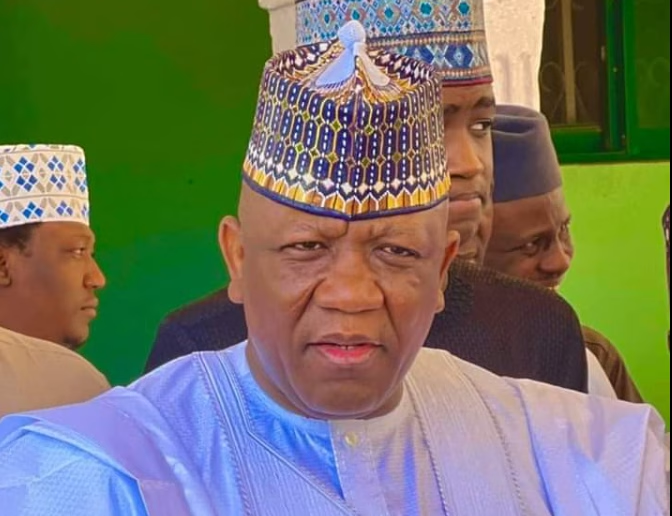
Recent developments in Nigeria’s power sector have thrust Senator Abdulaziz Yari into the spotlight, raising profound questions about these very principles. On December 29, 2025, Geregu Power Plc, a flagship electricity generation company listed on the Nigerian Exchange with a market capitalization exceeding ₦2.85 trillion, underwent a significant ownership shift. Billionaire Femi Otedola divested his indirect controlling stake—approximately 77 percent—through the sale of 95 percent equity in Amperion Power Distribution Company Limited to MA’AM Energy Limited, an Abuja-based entity, in a transaction valued at around $750 million (over ₦1 trillion). This restructuring transferred ultimate beneficial control to MA’AM Energy without altering Geregu’s direct shareholding on the exchange.
In the immediate aftermath, Otedola resigned as chairman, paving the way for Senator Yari, the lawmaker representing Zamfara West, to assume the role alongside a reconstituted board featuring new independent non-executive directors.
MA’AM Energy’s ownership structure, registered with the Corporate Affairs Commission, reveals four individuals each holding 25 percent stakes: individuals closely linked to Senator Yari, including family members. This positions the senator not merely as a figurehead but as a central beneficiary in steering one of Nigeria’s most strategic power assets.
While the deal was reportedly financed by a consortium of banks, the opacity surrounding the ultimate sources of funding and the rapid ascent of a newly incorporated entity to such prominence fuel legitimate public scrutiny.
Senator Yari’s trajectory amplifies these concerns. A career public servant, he entered prominent politics in the late 1990s, serving as a federal legislator before governing Zamfara State from 2011 to 2019 and transitioning to the Senate in 2019.

Prior to his governorship at around age 47, no substantial records document extensive private business ventures. His official remuneration during public service has been modest by comparison: as governor, estimates pegged monthly earnings at under ₦2 million including allowances; as a senator, basic annual salary hovers around ₦2 million (roughly ₦168,000 monthly), supplemented by regulated allowances totaling about ₦1 million monthly per Revenue Mobilisation Allocation and Fiscal Commission guidelines.
These figures pale against the scale of influence now wielded over a trillion-naira enterprise. Most critically, this appointment collides head-on with Nigeria’s Code of Conduct for Public Officers, embedded in the Fifth Schedule of the 1999 Constitution (as amended). Full-time public officers, including sitting senators, are expressly prohibited from engaging or participating in the management or running of any private business, profession, or trade—except farming. Chairing the board of a publicly listed company, even in a non-executive capacity, entails oversight, strategic direction, and potential conflicts that undermine this safeguard against personal interests clashing with public duties. The power sector, rife with regulatory interfaces involving government agencies, heightens risks of undue influence or compromised decision-making.
Compounding the ethical quandary are persistent, unresolved allegations from Senator Yari’s past tenure, including claims of governance lapses and contributions to Zamfara’s protracted insecurity through questionable security arrangements. Though contested and unadjudicated in court, these shadows linger amid the state’s enduring crises of banditry, abductions, and displaced communities, underscoring the premium on impeccable leadership.
Nigerians, grappling with erratic power supply and economic strains, deserve clarity. A serving senator at the helm of a pivotal power firm not only invites perceptions of illicit enrichment but erodes faith in institutions designed to serve the public good.
Asset declarations, mandatory under the Code, must be rigorously verified, with any unexplained wealth presumed acquired in breach. Senator Yari bears a moral and legal imperative to address these matters head-on. Silence erodes trust further; he must furnish transparent explanations on alignment with conduct rules, funding provenance, beneficial interests, and historical accusations. Full cooperation with bodies like the Code of Conduct Bureau is non-negotiable, including categorical responses to concerns and, where warranted, remedial steps.
The federal government cannot remain passive. Impartial probes by anti-corruption agencies and the Bureau are essential to affirm the rule of law, deter normalization of conflicts, and reassure citizens that public office remains a sacred trust, not a pathway to private empire-building. Zamfara’s beleaguered residents, in particular, merit prioritized peace-building over entrenched interests.
Ultimately, Nigeria’s quest for dignity, justice, and progress rests on leaders who embody the values they espouse. Senator Yari has a pivotal opportunity to dispel doubts through unequivocal accountability—or risk deepening the chasm between governance and the governed.
Perez writes from Abuja