

By Amb. Anderson Osiebe.
At a time when grief hangs thick in the air and the cries of citizens echo through devastated communities, leadership is not merely a title, it is a duty, a presence, and a moral obligation.
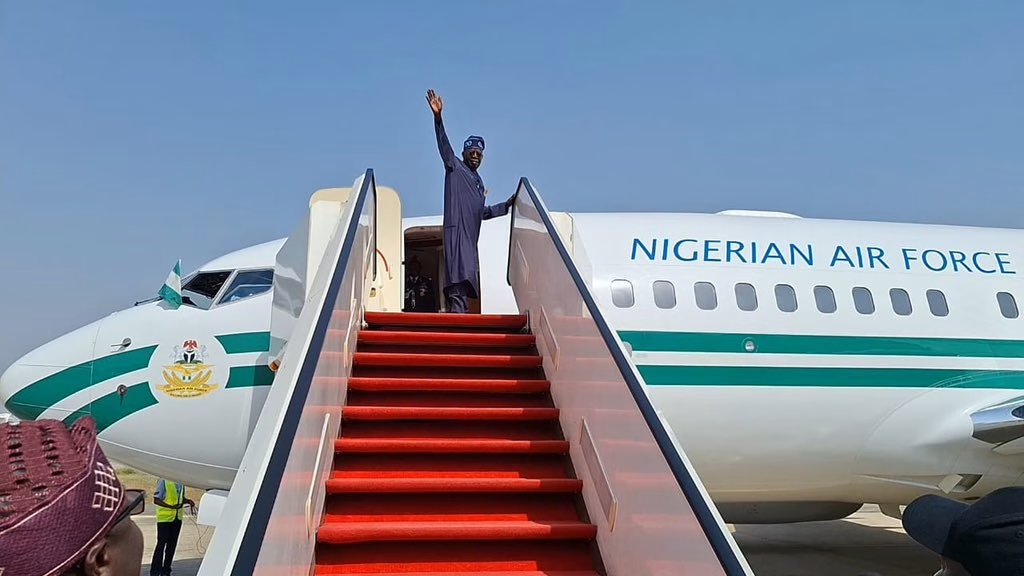
The recent decision by His Excellency, President Bola Ahmed Tinubu to travel out of the country in the wake of a deadly incident in Maiduguri, that claimed lives and left many injured has sparked a wave of public outrage, raising a fundamental question: What does responsible leadership look like in moments of national tragedy?
In nations where governance is deeply rooted in empathy and accountability, the response to tragedy is often swift, visible, and reassuring.
Leaders stay. They visit affected communities. They speak directly to the pain of the people. They embody the nation’s grief while mobilizing its strength.
Presence, in such moments, is not symbolic, it is powerful.
Nigeria, however, continues to grapple with a troubling pattern. Amid rising insecurity, from insurgency in the North-East to banditry, kidnappings, and communal clashes across the country, citizens increasingly feel abandoned, not just by systems, but by leadership itself.
The timing of the President’s trip to the United Kingdom has therefore become more than a matter of scheduling, it has become a symbol of perceived disconnect.
For families mourning their loved ones, and for communities struggling to rebuild, the absence of the nation’s highest office-holder at such a critical moment feels like a silence too loud to ignore.

This is not merely about one journey. It is about priorities. It is about optics. It is about trust.
Across the world, history has shown that the true test of leadership is not in times of comfort, but in moments of crisis. When disaster strikes, citizens do not just seek solutions, they seek reassurance. They look to their leaders not only for policy direction but for human connection.
Could the trip have been postponed? Could the nation have been given a moment of undivided presidential attention? These are the questions echoing across public discourse.
Defenders of the administration may argue that governance is continuous and that international engagements are critical for national development. While this holds some truth, it does not erase the emotional and psychological expectations of citizens in times of tragedy. Leadership is as much about perception as it is about action.
The deeper concern lies in what this signals to Nigerians already battling a sense of insecurity and neglect. When lives are lost and leadership appears distant, it widens the gap between the governed and those in power. It feeds a growing narrative that the pain of ordinary citizens does not command urgent attention at the highest levels.
Yet, this moment also presents an opportunity. An opportunity for reflection, recalibration, and renewed commitment to people-centered leadership. Nigerians are not asking for perfection; they are asking for presence, empathy, and visible accountability.
A responsible president is not defined solely by policies or global engagements, but by the ability to stand firmly with their people when it matters most. To lead from the front. To comfort. To act. To reassure.
As the nation mourns and questions linger, one truth remains clear: in times of crisis, leadership must not only be exercised, it must be felt.
Amb. Anderson Osiebe, Executive Director, HallowMace Foundation, Public Policy Expert and an Administrator writes from Abuja – Nigeria.
– God Bless Nigeria!