

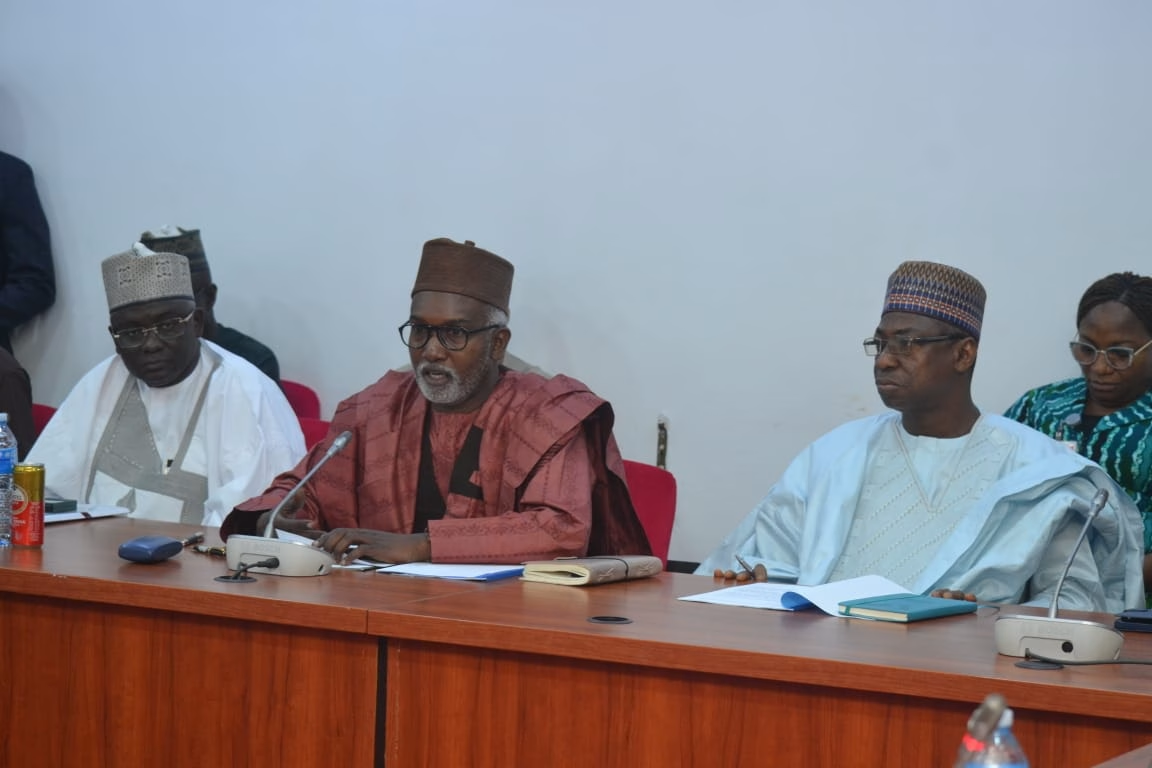
The Senate Committee on Foreign Affairs on Wednesday decried the worsening funding crisis in the Ministry of Foreign Affairs, warning that the situation is undermining Nigeria’s diplomatic effectiveness and global reputation.
Chairman of the Committee, Abubakar Sani Bello, raised the concerns during an oversight session with the Minister of Foreign Affairs, Yusuf Tuggar, and senior ministry officials at the National Assembly.
Bello said many Nigerian missions abroad are grappling with severe financial constraints, including unpaid salaries for locally engaged staff, outstanding school fees for diplomats’ children, medical and legal bills, and operational costs such as rent, electricity, internet services, and maintenance of official vehicles.
According to him, in some countries, local staff have gone three to four months without pay, forcing diplomats to manage morale and operations under extremely difficult conditions.
The Committee also expressed concern over Nigeria’s mounting statutory obligations to international organisations, noting that delays in meeting assessed contributions have exposed the country to embarrassment and possible sanctions.
In his response, Tuggar acknowledged the depth of the financial strain, stressing that the ministry’s capacity to carry out proactive diplomacy has been hampered by inadequate funding.

He specifically cited outstanding contributions to bodies such as the United Nations and the African Union, warning that persistent delays in payments could weaken Nigeria’s standing in multilateral institutions.
Also at the budget defence was the Director-General of Nigerian Technical Aid Corps (NTAC), Yusuf Buba Yakub. Recall that the agency is a foreign-policy development programme run by the Federal Government of Nigeria.
It functions as Nigeria’s “skills diplomacy” arm instead of giving cash aid, Nigeria sends professionals (teachers, doctors, engineers, agriculturists, ICT experts, legal officers, etc.) to requesting countries that lack manpower.
However, the DG oversees deployments mainly to African, Caribbean and Pacific (ACP) nations where Nigeria supports public institutions such as hospitals, universities, ministries and training colleges.
Since the programme began in 1987, Nigeria has deployed well over 10,000 Nigerian professionals across the world.
Meanwhile, the Committee directed the ministry to submit a comprehensive breakdown of its outstanding liabilities, including international dues, to facilitate further engagement with the Appropriations Committee.
Lawmakers assured the ministry of continued legislative support while calling for urgent measures to stabilise funding and strengthen Nigeria’s diplomatic missions worldwide.