
Pheelangwah Commends DIA, Calls for Advanced Technology and Stronger Capacity in Nigeria’s Intelligence Operations

By ThankGod Inalegwu
The Permanent Secretary of the Ministry of Defence, Richard Pheelangwah, has reaffirmed the Federal Government’s commitment to strengthening Nigeria’s intelligence architecture following his visit to the Defence Intelligence Agency (DIA) in Abuja.
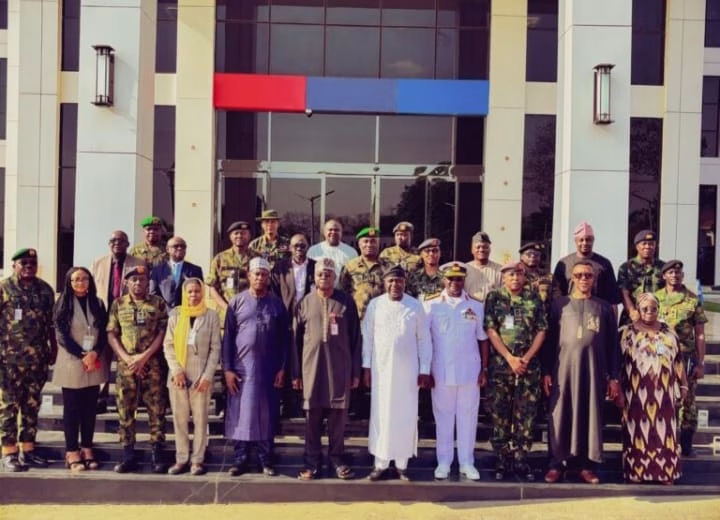
The visit, which took place on Wednesday as part of his familiarization tour of agencies under the Ministry, provided an opportunity for strategic discussions on enhancing national security and intelligence operations.

During the engagement, Pheelangwah commended the professionalism, resilience, and dedication of DIA personnel in safeguarding the nation. He emphasized the agency’s critical role in intelligence gathering, sharing, and fostering inter-agency collaboration, noting that such efforts have significantly contributed to ongoing successes in combating terrorism, banditry, and other security threats.
The Permanent Secretary attributed these gains to the leadership of Bola Ahmed Tinubu, stressing that strong political will has been instrumental in driving security sector reforms.
Highlighting the evolving nature of global security challenges, Pheelangwah urged the agency to continuously adopt cutting-edge technologies to enhance operational efficiency and remain ahead of emerging threats. He also stressed the importance of investing in personnel welfare, training, and capacity development to boost morale and ensure optimal performance.
Reaffirming the Ministry’s support, he assured that efforts are ongoing to further strengthen the operational capabilities of the agency.
In his response, the Chief of Defence Intelligence, Emmanuel Parker Undiandeye, described the visit as timely and strategic, noting that it provided an avenue to highlight the interconnected roles within Nigeria’s intelligence community.
Undiandeye emphasized that collaboration among security agencies remains crucial in addressing threats such as terrorism, extremism, kidnapping, and cybercrime. He explained that the DIA operates a proactive intelligence system aimed at identifying and neutralizing threats before they materialize, providing early warnings to the armed forces and other security agencies.
According to him, the agency’s success is driven by the integration of human intelligence, advanced technology, and strategic partnerships, ensuring accuracy and precision in operations.
Despite these achievements, the CDI pointed out several challenges, including limited operational capacity, inadequate equipment, and funding constraints. He, however, highlighted notable milestones, including reduced cases of unintended targeting, minimal civilian casualties, and improved human rights compliance over the past two years.
Undiandeye disclosed that over 1,300 personnel have undergone specialized training in intelligence and related fields, while advancements in technology have significantly enhanced the agency’s preventive and proactive intelligence capabilities.
He commended the President and the Ministers of Defence for their support in securing funding but appealed for increased resources to address operational demands. These include improved staff welfare at defence missions, timely release of operational funds, and the acquisition of modern intelligence platforms.
The meeting was attended by senior officials from the Ministry of Defence, directors from the DIA, and principal staff officers of the agency, underscoring a unified commitment to strengthening Nigeria’s national security framework.