
Kampala Convention Domestication: President Tinubu Has Restored IDPs’ Rights, Dignity, Set Example for Africa Countries – Kalu
...Says Act Will be Domesticated In States

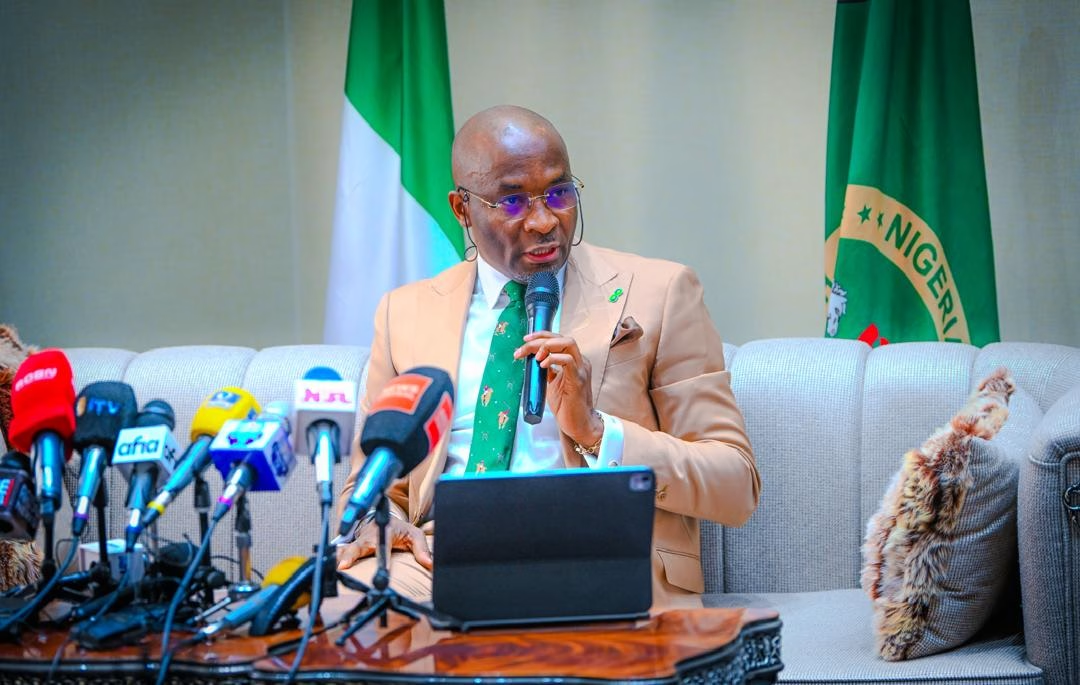
The Deputy Speaker of the House of Representatives, Rt. Hon. Benjamin Okezie Kalu, has commended President Bola Ahmed Tinubu for signing the Kampala Convention Domestication Act into law, describing it as a significant step towards restoring the dignity of Internally Displaced Persons (IDPs) and upholding their welfare.
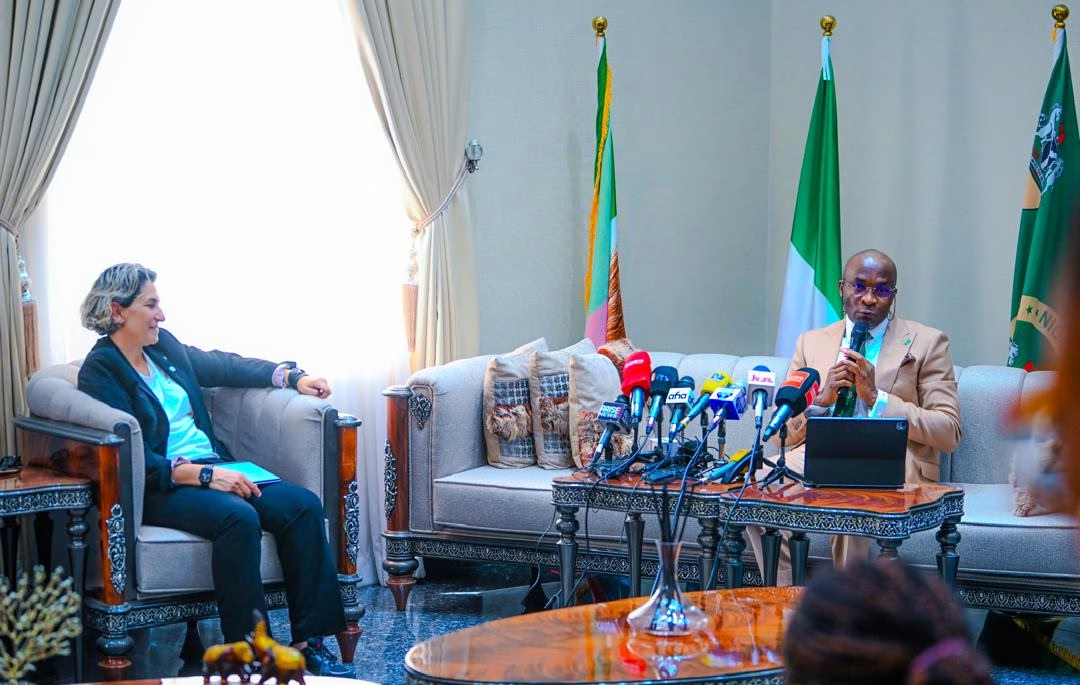
Kalu gave the commendation on Tuesday when he received the delegation of the International Committee of the Red Cross (ICRC) in Nigeria, led by Doris El Doueihy on a courtesy visit in Abuja.
The Delegation came to appreciate the Deputy Speaker, the National Assembly and the country for domesticating the Kampala convention to enhance the welfare of the IDPs.
It will be recalled that Kalu sponsored the Act alongside 6 other lawmakers as co-sponsors.
The Deputy Speaker also expressed gratitude to the Attorney General of the Federation, Chief Lateef Fagbemi for his role in the domestication process.

He added that the Act will be domesticated at the state level for easy implementation.
Kalu said: “You can sign bills that have to do with electoral act, you will benefit from it. You can sign bills that have to do with maybe the environment, you benefit from it. But when you sign a bill that has to do with people who may not give you back anything, then it means that you are wearing the face of humanity in your leadership. And for that, I want to congratulate the President of the Federal Republic of Nigeria for being selfless, for setting the right step forward for other African countries who are still sitting on the fence to hop in. And you know, they were waiting for us.
“I must thank the Attorney General of the Federation. I have thanked him privately, and I want to thank him publicly, because the President also pushed it to him to do his analysis of my proposition with regards to this domestication happening, and how healthy is it going to be for the country. And that is how the President operates. He doesn’t just put his signature on bills. He goes through the whole nine yards of scrutiny. And you need to read the wordings of the letter of the Attorney General of the Federation, who is a seasoned lawyer himself and his words brought me comfort that the nation is actually interested in the leadership that has a human face.”

Kalu noted that the signing of the Act has set an example for other African countries and will catalyze them to domesticate the Act to address IDP challenges.
“Most African countries have been waiting for Nigeria to have a buy-in into this, and now that we have done that, I can assure you that a lot of African countries will come on board to embrace this shield. We have given a legal shield for the rights, for the dignity, for the welfare of these people, because they are persons, even though they are displaced, they are citizens, even though they are displaced. And so when you visit the camp and see what they go through, you begin to question. They didn’t bring this upon themselves. What is their protection? That was the reason for Kambala convention, and now that we have domesticated it, the law has become alive in our country for them to be protected in their rights, in their dignity and in their welfare. And when you talk about this, domestication is not going to end at the federal level. We are setting up mechanisms to make sure that the States will domesticate this particular convention in their various codified laws”.
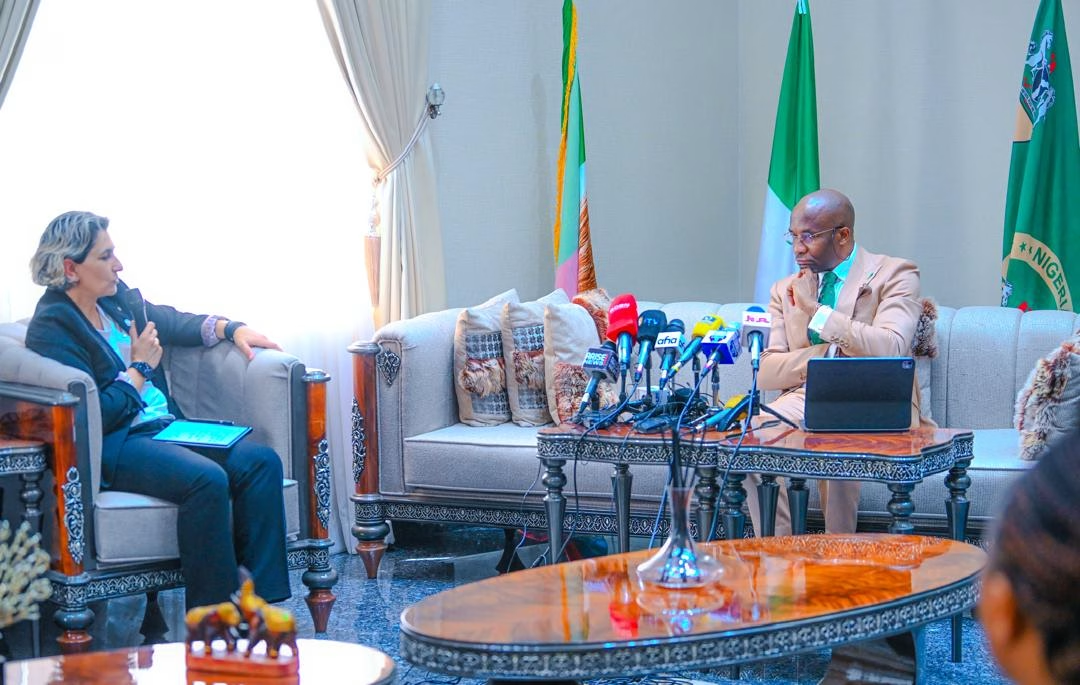
Kalu also called on government agencies to ensure their budgets reflect the needs of the IDPs, emphasizing implementation and impact-driven action.
“But is it going to stop here? What next? The next is implementation. We don’t want the wordings of this particular domestication of this convention to be dead words on the shelves. I don’t want it to be something lying on the shelf. So we are going to give it wheels. It should be impact driven. So, one is to domesticate it. Another one is to give it wheels. And the parliament has what it takes through our oversight responsibility that is found in Section 88, 89 of the Constitution of the Federal Republic of Nigeria, to ensure that we call the various agencies of government, refugee Commission, the Budget Office, Appropriation Committee of the Parliament, the Finance Ministry, to make sure that their budget reflects this domesticated convention in terms of its implementation, which will cover the needs analysis of the IDPs. If we have done the needs analysis of these camps, you will find out that they have health issues. They have early pregnancies, teenage pregnancies. They have insecurity problem”, he said.
Kalu however said that Nigeria was more interested in ending the challenges that lead to the displacement of its citizens.
“It is not our intention to have the IDPs remain displaced persons forever, so there is a provision on how to also get them back home. We don’t want people to be in the IDP camps and stay there and have generation one, generation two, generation three. So, the ability also to make sure that we end whatever that has displaced them and reintroduce them back to their natural place of habitation, their native land is there. We have set up mechanism that will help us partner with the Executive to make sure that that happens”, he said.
Earlier, the leader of the ICRC delegation, Doris El Doueihy said Nigeria is on the right track with the domestication of the Act.
“We are here to celebrate with you but we started celebrating a while ago. I have been in Nigeria over a year. This has been ongoing for years. Since I arrived I heard that you’re the main driver on the efforts to reach domestication. Thank you so much.
“Nigeria is on the right track and this is an example for other countries to follow and do the same.
Displacement is major problem any population is facing. We are here today on behalf of ICRC and the delegation of Nigeria to thank you for the great effort and reaching this great outcome of domestication of Kampala Convention”, she said.