
Musawa Inaugurates Four Committees to Drive ₦100bn Growth, 2 Million Jobs in Creative Sector by 2030

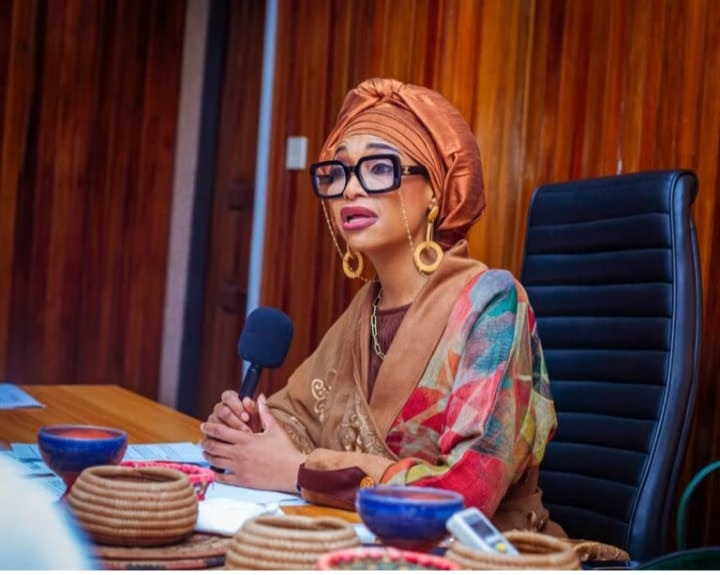

The Minister of Art, Culture, Tourism and Creative Economy, Hannatu Musawa, has inaugurated four strategic committees aimed at transforming Nigeria’s creative industries into a major pillar of economic growth and job creation.
The initiative, unveiled in Abuja on Tuesday, underscores the commitment of the administration of Bola Ahmed Tinubu to reposition the creative economy as a key driver of national development.
According to a statement issued by the Special Adviser on Media and Publicity, Nneka Ikem Anibeze, the committees will develop a comprehensive roadmap to unlock the sector’s vast but underutilized potential.
The committees—Policy and Strategy; Programmes and Implementation; Stakeholder Engagement; and Monitoring and Evaluation—have been mandated to tackle structural challenges, strengthen governance frameworks, and unlock sustainable funding channels for the industry.
Despite Nigeria’s global recognition in music, film, fashion, and the arts, Musawa noted that the sector currently contributes only 2.3 percent to the country’s Gross Domestic Product, far below its potential. She identified fragmented policies, weak enforcement of intellectual property rights, and limited access to finance as major barriers to growth.
Setting ambitious targets, the minister disclosed that the government aims to boost GDP by ₦100 billion and create two million jobs by 2030 through the initiative.
“This is not just another policy exercise; it is a nation-building task that requires clear thinking, coordination, and actionable solutions,” Musawa said while addressing members of the committees.
Under the plan, the committees are expected to submit their terms of reference alongside a 90-day action plan by April 21, 2026, which will serve as the foundation for long-term reforms. To ensure transparency and accountability, the ministry will also conduct quarterly public briefings to track progress.
The initiative has attracted support from key development partners, including the Nigerian Economic Summit Group, UNESCO, and the United Nations Development Programme, highlighting growing international interest in Nigeria’s creative economy.
Providing industry perspective, the Chief Executive Officer of the Nigerian Economic Summit Group, Ikenna Nwosu, described the sector as an “economic frontier” with vast potential to drive exports, innovation, and global competitiveness. However, he warned that persistent issues such as poor infrastructure, weak intellectual property protection, and inconsistent policies must be addressed.
Beyond policy development, the committees are expected to propose practical solutions, including innovative financing mechanisms, stronger public-private partnerships, and the establishment of a Creative Economy Development Fund.
Plans are also underway to host an international summit to position Nigeria as a prime destination for creative investment.
With these measures, the government expressed optimism that a coordinated, well-funded, and policy-driven approach would translate Nigeria’s cultural influence into tangible economic gains—effectively turning creativity into capital and talent into sustainable national growth.