
Atiku, Obi, Kwankwaso, Amaechi Lead ADC Protest Against INEC Over Leadership Dispute

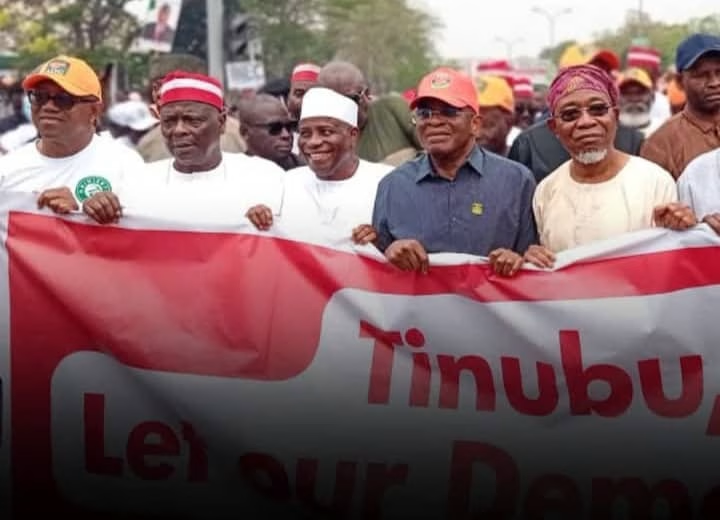

Prominent political figures including Atiku Abubakar, Peter Obi, Rabiu Musa Kwankwaso, Rauf Aregbesola, and Rotimi Amaechi on Wednesday led a mass protest by members and supporters of the African Democratic Congress (ADC) to the headquarters of the Independent National Electoral Commission (INEC) in Abuja.
The protest was sparked by INEC’s refusal to recognise the leadership of the party under former Senate President David Mark, a development the demonstrators described as a threat to democratic principles and internal party autonomy.
Carrying placards with inscriptions such as “Respect Party Supremacy,” “INEC Must Uphold Justice,” and “Democracy Beyond Interference,” the protesters accused the electoral body of undue interference in the internal affairs of political parties. They insisted that the recognition of party leadership should be determined by party stakeholders in accordance with their constitution.
Speaking during the protest, Atiku Abubakar emphasized the need for electoral neutrality, warning that actions perceived as bias could erode public confidence in Nigeria’s democratic institutions. Peter Obi, on his part, called for adherence to due process, urging INEC to act within the confines of the law and respect internal resolutions reached by the party.
Rabiu Musa Kwankwaso described the situation as “a test of democratic maturity,” noting that political stability depends on strong institutions that operate without fear or favour. Similarly, Rotimi Amaechi and Rauf Aregbesola urged the commission to reverse its stance and recognise the David Mark-led leadership to avoid escalating tensions within the party.
The protesters later submitted a formal petition to INEC officials, demanding immediate recognition of the new leadership and warning that failure to do so could lead to further political action.
In response, INEC officials acknowledged receipt of the petition and assured the delegation that the commission would review the matter in line with constitutional provisions and electoral guidelines.
The leadership crisis within the ADC has drawn significant national attention, with analysts warning that prolonged disputes could weaken opposition cohesion ahead of future elections. Political observers say the outcome of the standoff may set a precedent for how party leadership conflicts are handled in Nigeria’s evolving democratic landscape.