
U.S. Boosts Missile Production as Middle East Tensions Escalate, Iran Rejects Ceasefire Proposal



By ThankGod Inalegwu
The United States Department of Defense has announced sweeping measures to strengthen America’s military capabilities amid the intensifying conflict in the Middle East, unveiling new agreements with top defence contractors to significantly increase missile production.
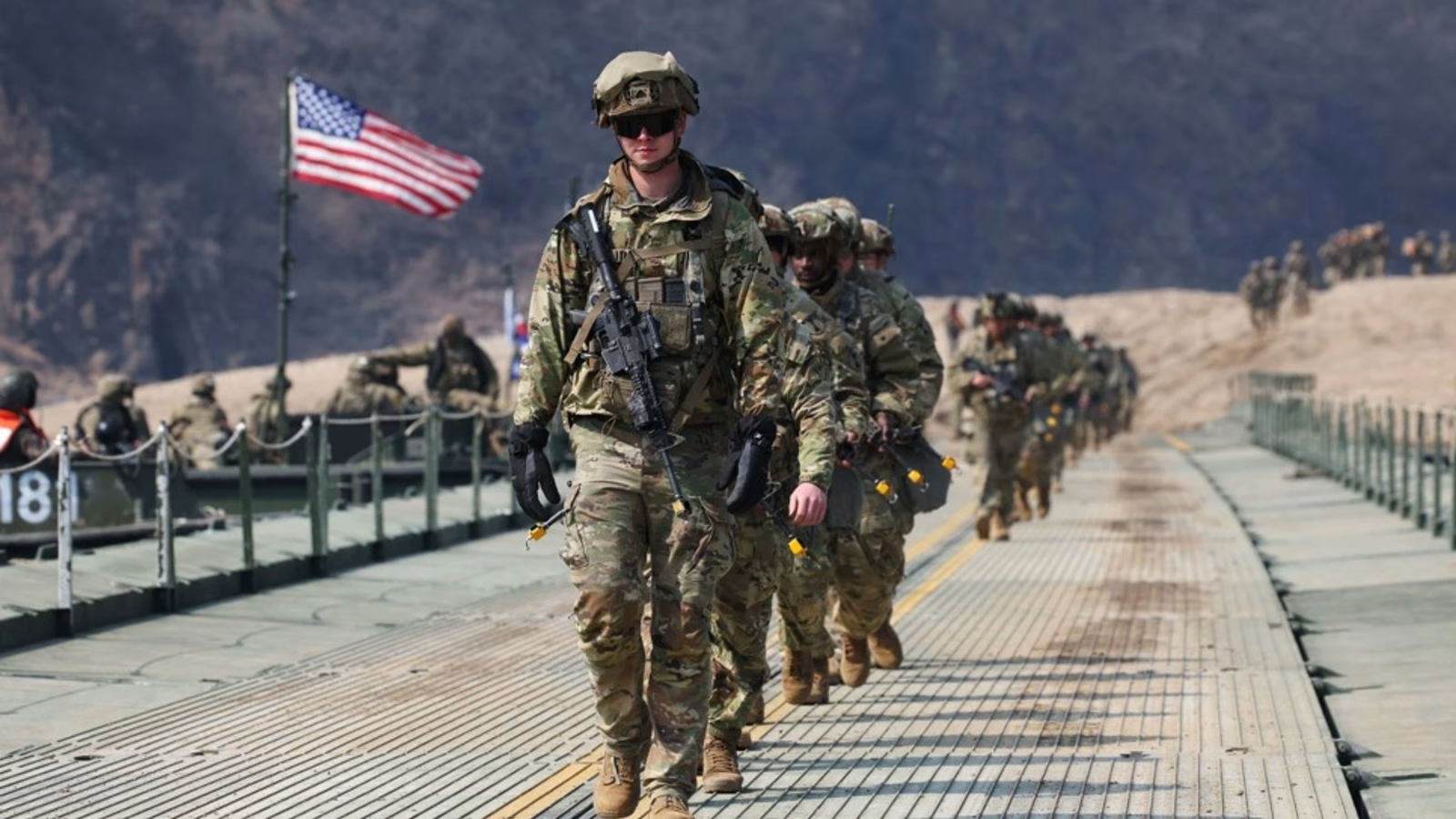
In a statement released on Wednesday, the Pentagon said the move is aimed at replenishing depleted stockpiles following sustained military operations in the region. The heavy use of interceptor systems by U.S. forces, alongside allies such as Israel and Gulf partners, has placed unprecedented pressure on existing reserves, particularly in response to ongoing retaliatory strikes from Iran.
To address the shortfall, major defence firms Lockheed Martin and BAE Systems have committed to ramping up production of critical components for the Terminal High Altitude Area Defence (THAAD) system. The Pentagon described the initiative as placing the nation’s “industrial base on a wartime footing,” underscoring the urgency of the buildup.
Lockheed Martin had earlier revealed plans to expand THAAD production from approximately 100 units annually to about 400 units in the coming years, reflecting the growing demand for advanced missile defense systems.
In a related development, the Pentagon has directed Lockheed Martin to accelerate the production of Precision Strike Missile (PrSM), a new class of tactical ballistic weapons recently deployed in operations targeting Iran. The company confirmed it intends to quadruple its production capacity, building on a $4.94 billion contract awarded by the U.S. Army.
Additionally, Honeywell Aerospace has been tasked with boosting output of essential components for America’s munitions stockpile, including advanced navigation systems, in a bid to reinforce supply chains and sustain prolonged military readiness.
Meanwhile, diplomatic efforts to de-escalate the conflict appear to be faltering. Iranian authorities have reportedly rejected a U.S.-backed ceasefire proposal, insisting on setting their own conditions for ending the hostilities. According to Iranian state media, a senior official stated that Tehran would determine the timing and terms of any ceasefire independently.
Reports suggest that Iran’s conditions include an immediate halt to what it describes as aggression and targeted assassinations, guarantees against future attacks by the U.S. or Israel, and compensation for damages incurred during the conflict. Additional demands reportedly call for a cessation of hostilities across regional fronts and international recognition of Iran’s sovereignty over the strategic Strait of Hormuz.
As military preparations intensify and diplomatic channels remain strained, analysts warn that the region could face a prolonged period of instability with far-reaching global implications