


By ThankGod Inalegwu
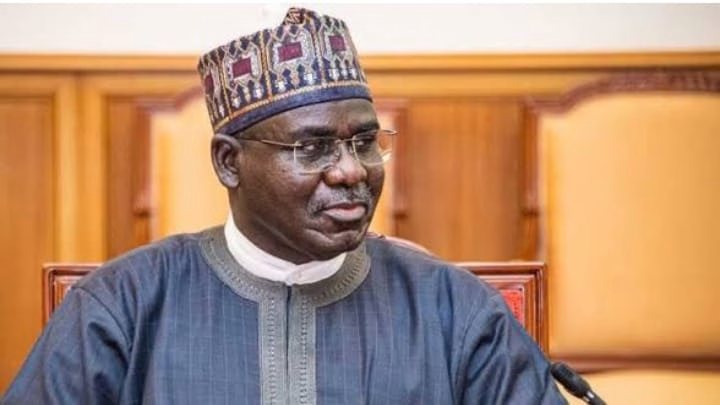
Former Chief of Army Staff, Tukur Buratai, has revealed that individuals responsible for financing terrorism in Nigeria are already known to security agencies but continue to operate freely within the country.
Speaking during a television programme, Buratai addressed growing public concern over the persistent insecurity across parts of the nation, particularly in northern regions plagued by insurgency and banditry. According to him, the challenge is not in identifying those behind the funding of terrorist activities, but in taking decisive action against them.
He explained that relevant authorities possess intelligence on these individuals but have chosen not to disclose their identities publicly. While he acknowledged that such decisions lie within the jurisdiction of appropriate security institutions, he stressed that withholding names without corresponding enforcement measures undermines efforts to combat terrorism.
Buratai maintained that merely identifying or mentioning suspects is insufficient, emphasizing the need for concrete legal and operational steps to dismantle terror financing networks. “It is not about calling names; what matters is taking action,” he said, underscoring the urgency of prosecuting those involved.
The former army chief also clarified that the responsibility to expose and prosecute terror financiers does not rest with him, but with designated agencies empowered by law to carry out such tasks. He noted that many of the alleged sponsors remain within Nigeria and continue their activities despite being on the radar of security operatives.
His remarks come at a time of renewed anxiety over Nigeria’s security landscape, as communities in the North continue to experience violent attacks linked to insurgent groups. The situation has intensified calls from citizens and stakeholders for greater transparency, accountability, and stronger action against those enabling terrorism financially.
Analysts say tackling terror financing is critical to weakening extremist groups, as cutting off funding channels could significantly disrupt their operations. Buratai’s comments have therefore reignited debate on whether Nigeria’s security strategy adequately addresses the financial backbone of terrorism.
As the country grapples with these challenges, many Nigerians are looking to security agencies and the government for decisive measures that go beyond intelligence gathering to actual prosecution and deterrence