


By ThankGod Inalegwu
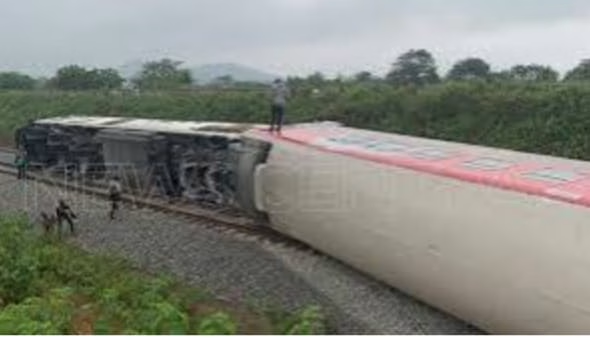
Hundreds of passengers were left stranded on the Kaduna–Abuja rail corridor after two trains were involved in a collision, triggering panic, confusion and major disruption along one of Nigeria’s busiest transport routes.
The incident, which occurred along the strategic rail line linking the Federal Capital Territory to Kaduna State, reportedly forced an abrupt suspension of movement as emergency responders and railway officials moved to the scene to assess the situation and evacuate affected passengers.
Eyewitness accounts said the collision caused fear among travelers, many of whom were trapped for hours before help arrived. Some passengers were said to have disembarked and waited along the tracks, while others remained inside the train coaches amid uncertainty over when rescue operations would be completed.
Although the full extent of casualties and damage was not immediately clear, the incident sparked widespread concern over safety on the Abuja–Kaduna route, a corridor heavily relied upon by commuters seeking an alternative to road travel.
Sources said the disruption left hundreds of passengers stranded at various points, with many lamenting poor communication and delays in official response. Family members and relatives of passengers were also said to be anxious as information about the condition of those onboard remained sketchy in the immediate aftermath.
Railway authorities have yet to provide comprehensive details on the cause of the collision, but preliminary indications suggest operational or signaling challenges may have played a role. Officials are expected to launch a full investigation to determine the circumstances surrounding the crash and recommend measures to prevent a recurrence.
The Kaduna–Abuja rail service has in recent years become a critical transport option for many Nigerians, particularly because of persistent security concerns on the highway. Any disruption on the route often has far-reaching consequences for business, official travel and daily commuting.
As stranded passengers awaited alternative arrangements, calls mounted for the Nigerian Railway Corporation and relevant transport authorities to strengthen safety procedures, improve emergency response systems and restore public confidence in rail transportation.
The collision is likely to renew debate over infrastructure maintenance, operational efficiency and passenger safety across the nation’s rail network.