

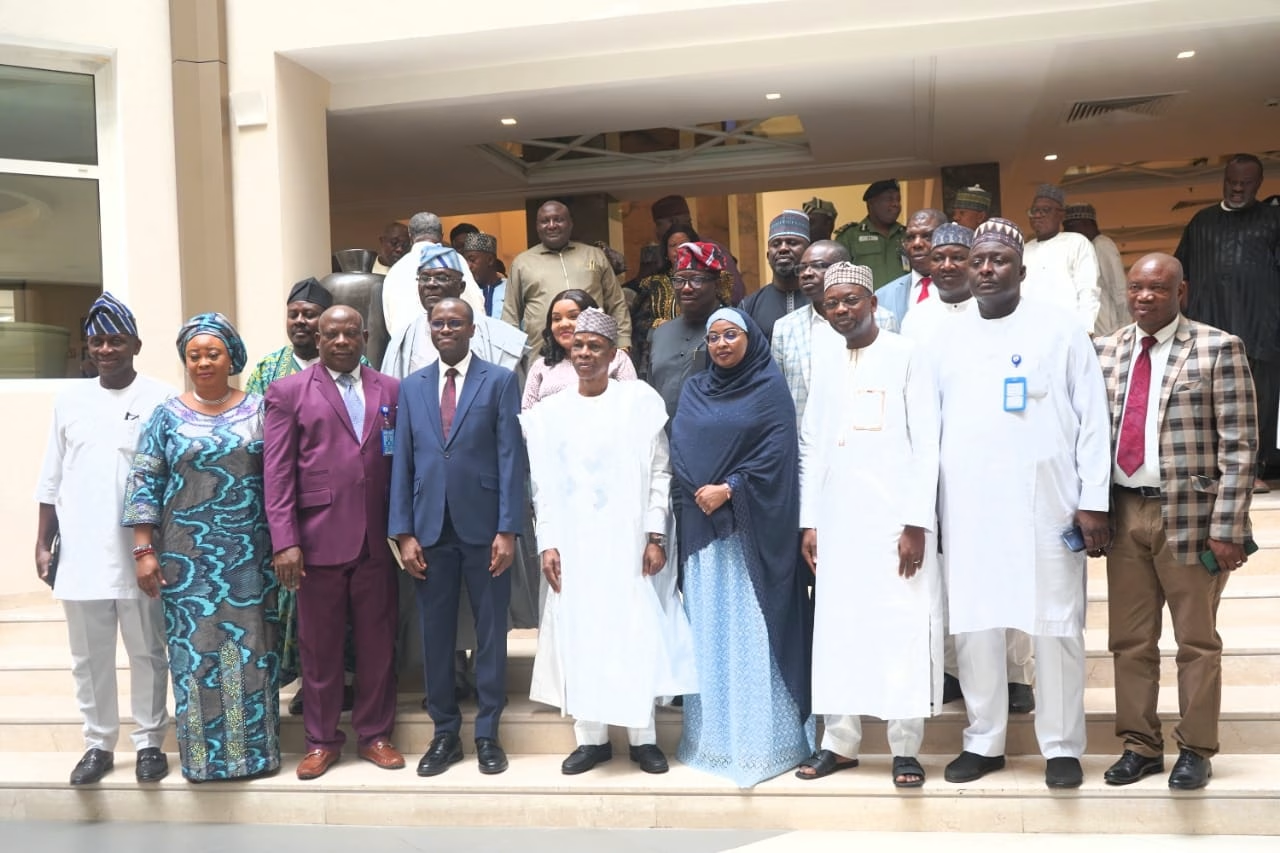

The Independent Corrupt Practices and Other Related Offences Commission (ICPC) has called for a fundamental strengthening of integrity and revenue-collection frameworks within the Nigerian Inland Waterways Authority (NIWA), labelling systemic reforms as “essential” for national development. ICPC Chairman Dr. Musa Adamu Aliyu, SAN, issued the directive while opening a two-day executive anti-corruption training in Abuja, organised by NIWA in collaboration with the Anti-Corruption Academy of Nigeria (ACAN).
Addressing senior officials, Dr. Aliyu stated that for an agency with NIWA’s strategic regulatory and revenue-generation mandate, embedding robust anti-corruption systems was “not optional but essential.”
He emphasised that integrity must be systematically woven into an organisation’s procedures and controls, not left to individual ethics. “Preventing corruption is more beneficial and cost-effective than running after stolen funds,” Dr. Aliyu asserted, outlining the Commission’s preventive focus.
ICPC boss pledged the Commission’s support through system reviews, corruption risk assessments, and capacity-building initiatives to help safeguard public trust and operational efficiency across Nigeria’s inland waterways network.
Declaring the workshop open, the Minister of Marine and Blue Economy, His Excellency Dr. Adegboyega Oyetola, reinforced the critical link between institutional integrity and national prosperity. Represented by the Permanent Secretary, Hajia Fatima Sugra Tabi Mahmood, the Hon Minister described NIWA as a pivotal driver of the Federal Government’s Blue Economy agenda. “System integrity is the foundation of effective public service, national development, and sustainable institutions,” Dr. Oyetola stated.
He argued that integrity is an economic necessity, vital for reducing transport costs, enabling trade, and attracting investment, urging stakeholders to model ethical leadership and pursue innovative revenue strategies.
In his welcome address, NIWA’s Board Chairman, Barrister Mukhtari Shehu Shagari, CFR, framed the retreat within President Bola Ahmed Tinubu’s Renewed Hope Agenda; further declaring that for NIWA, integrity “cannot be an afterthought” but must be a practical discipline guiding every decision.
Barrister Shagari outlined a comprehensive integrity action plan, committing to enhanced transparency through digital payment systems, strengthened internal controls, workforce professionalisation via continuous ethics training, and community engagement in service monitoring; stressing that the goal was not merely to raise revenue but to “create resilient systems that attract private investments and foster community partnerships.”
The Provost of the Anti-Corruption Academy of Nigeria (ACAN), Professor Sheriff Ghali Ibrahim, represented by Deputy Director Mr. Clement Obaniyi, noted that the workshop was designed to deliver practical outcomes. Participants are expected to learn to identify corruption risk points in revenue management, apply controls to prevent leakages, and formulate actionable integrity plans for their units.
The Acting Managing Director of NIWA, Umar Yusuf Girei, thanked the Minister, the ICPC, and the NIWA Board for their support, urging all staff to sustain the collaborative spirit of the retreat to achieve greater institutional effectiveness and progress.